
The Art of Collecting
How a Collection Begins
Collectors are often drawn to objects that share a common thread while still expressing individual character. A collection may begin with something as luminous as mother-of-pearl, as tactile as ceramic, or as organic as shells gathered over time. Each object stands on its own—but together, they begin to form something richer.
As objects accumulate, something subtle and powerful happens. What once felt like individual pieces begins to form relationships. Colors echo one another, forms create rhythm, and materials reveal their distinct voices. The objects begin to speak—and this quiet dialogue is often the moment when a group transforms into a collection.
A Collection Begins with Intimacy
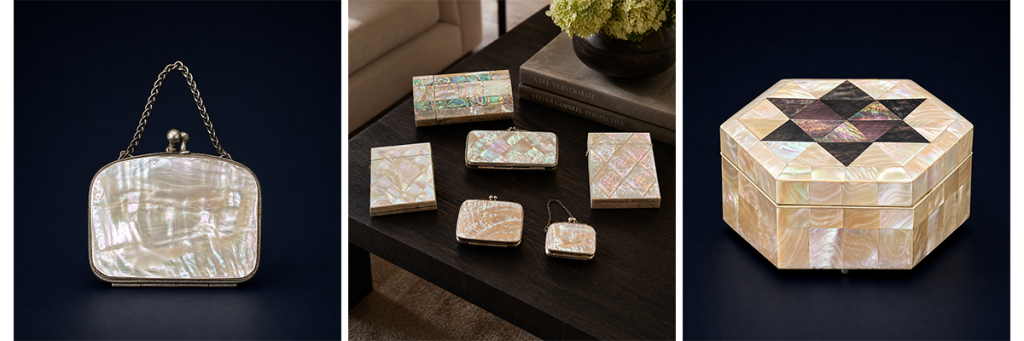
Mother-of-Pearl purses, card carriers, and boxes.
Small personal objects—boxes, cases, and purses—come together to form a luminous and intimate beginning to a collection.
A grouping of mother-of-pearl objects illustrates how collections often begin with pieces meant to be handled and admired closely. Their iridescent surfaces shift in tone—from soft cream to flashes of pink, green, and gold—capturing light in constantly changing ways.
Individually, each piece is delicate and complete. Together, they form a field of reflection and texture, where subtle differences in pattern and construction become more apparent.
Character and Repetition in Form
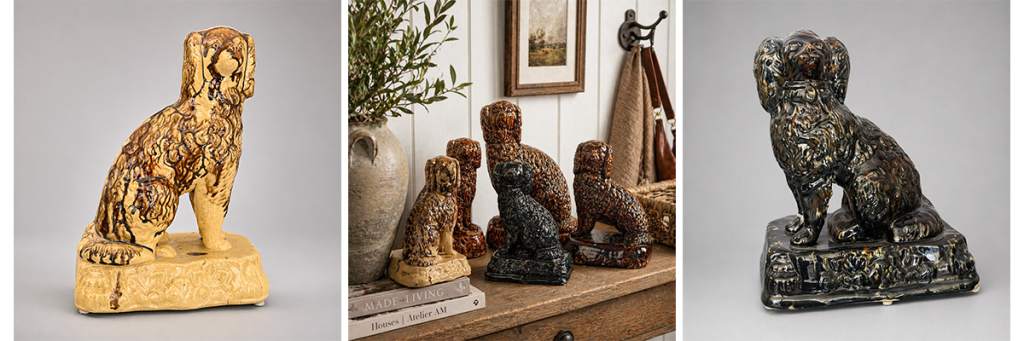
Repetition of form reveals variation—each ceramic figure holds its own character within a unified group.
Bennington pottery dogs demonstrate the beauty of collecting within a single form. Though similar in silhouette, each figure carries its own personality through glaze, tone, and surface detail.
Arranged together, the figures create a sense of presence—almost conversational. The richness of the mottled glazes, ranging from warm browns to deep, near-black tones, emphasizes the individuality of each piece while maintaining cohesion.
Nature as the First Collection
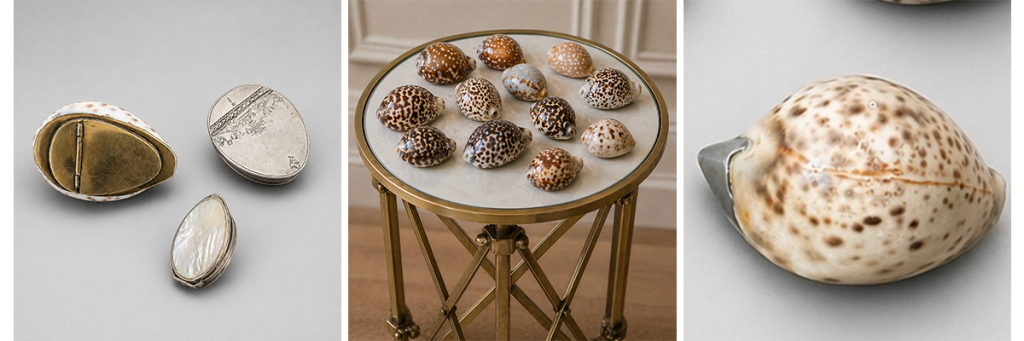
Silver Mounted Cowrie Boxes
A collection of cowrie shells offers a study in pattern and variation. Their smooth, polished surfaces are marked by intricate speckling—each shell distinct, yet clearly part of a larger family.
Reimagined here as English Georgian boxes with silver mounts, these natural forms take on a refined, decorative function. The addition of finely worked silver elevates each shell, transforming it from found object into crafted artifact—bridging the organic and the ornamental.
These objects remind us that collecting often begins in nature. The act of gathering—guided by curiosity and attraction—lays the foundation for more intentional collections later in life, where beauty is not only discovered but thoughtfully preserved and framed.
Glass and the Language of Light
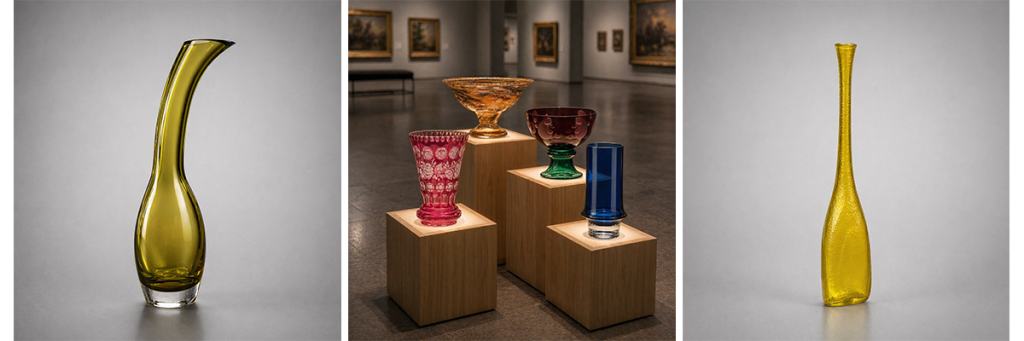
Glass Collection
Glass transforms a collection through light—color, transparency, and form shifting with every angle.
Vintage glass introduces luminosity into collecting. Deep ruby, amber, and saturated blue tones interact with light, creating reflections and shadows that change throughout the day.
Grouped together, these vessels become more than functional objects—they act as sculptural forms. Their differences in thickness, cut, and shape create visual rhythm, allowing the eye to move easily from one piece to another.
The Collector’s Rule of Three

Collectors often discover a simple truth:
One object stands alone.
Two objects begin a relationship.
But three objects create a conversation.
With three or more pieces, something changes. The eye begins to move between them—comparing, connecting, and interpreting. This is often the moment when a collection is born.
From there, growth becomes intentional. Each new addition is chosen not only for its beauty, but for how it contributes to the evolving dialogue.
Following the Collector’s Eye
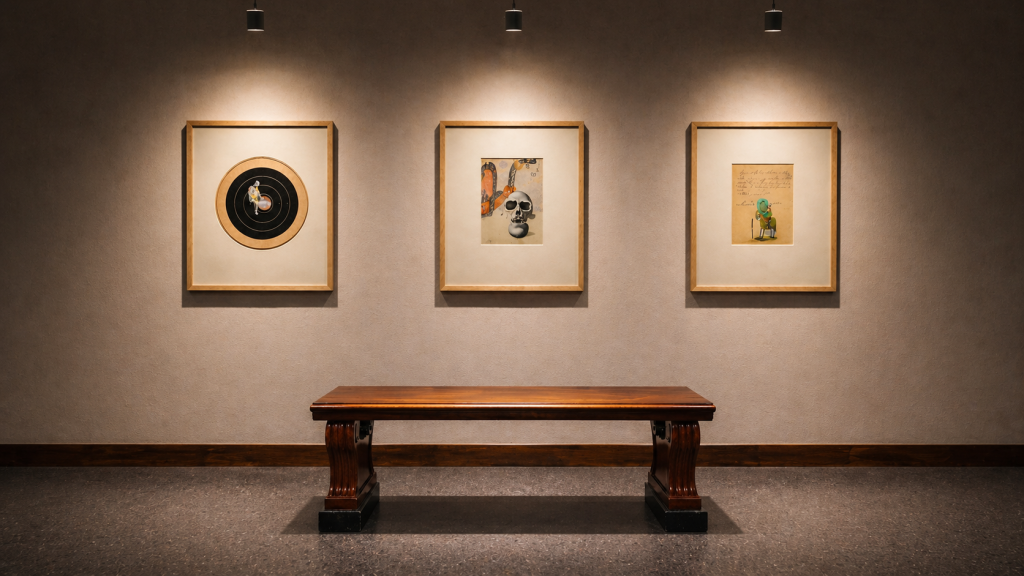
Series of collages – private collection
Most collections begin with instinct rather than expertise.
A collector may notice recurring attractions—the glow of glass, the warmth of ceramic glaze, the shimmer of mother-of-pearl, or the organic beauty of shells. Over time, these preferences become clearer, shaping the direction of the collection.
Experience refines the eye, but instinct remains essential.
The Pleasure of the Hunt
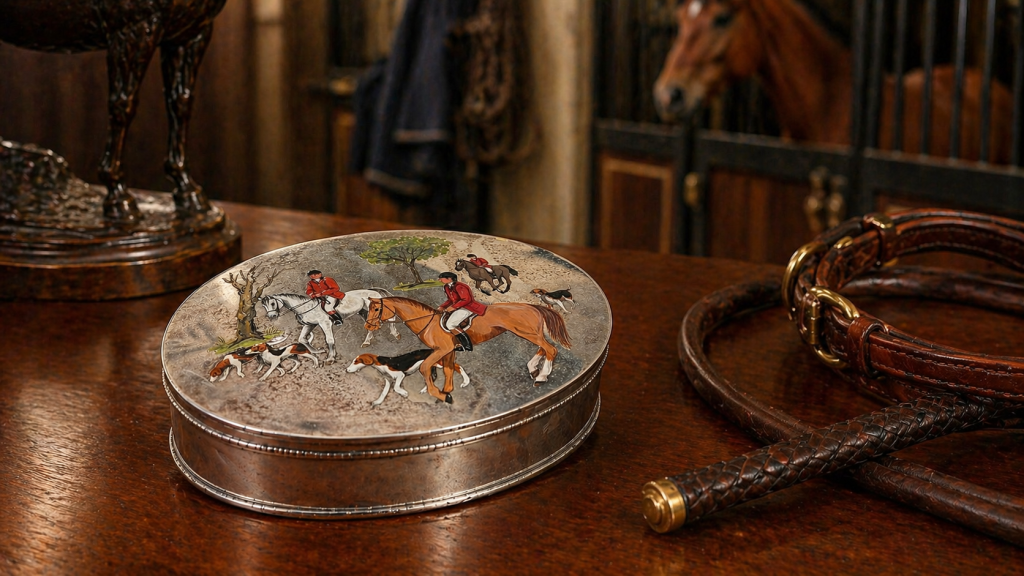
Silver Hunt box
Collecting is never truly finished.
There is always another discovery waiting—a piece that fits perfectly, or one that unexpectedly reshapes the collection. Each object deepens the narrative.
In the end, collecting is not simply about owning objects.
It is about noticing them—recognizing beauty, craftsmanship, and history—and allowing those discoveries to gather into something meaningful.
A collection is not built all at once.
It is revealed, piece by piece.