Collection of Bennington-Type Rockingham-Glazed Pottery / $960 – $1200. Each
Country / Year: USA, 19th century
Condition: Very Good
Measurements: H: ” / W: ” / D: “

$1,200.00
$1,200.00
Collection of Bennington-Type Rockingham-Glazed Pottery / $960 – $1200. Each
Country / Year: USA, 19th century
Condition: Very Good
Measurements: H: ” / W: ” / D: “
American, mid-19th century, circa 1845–1865
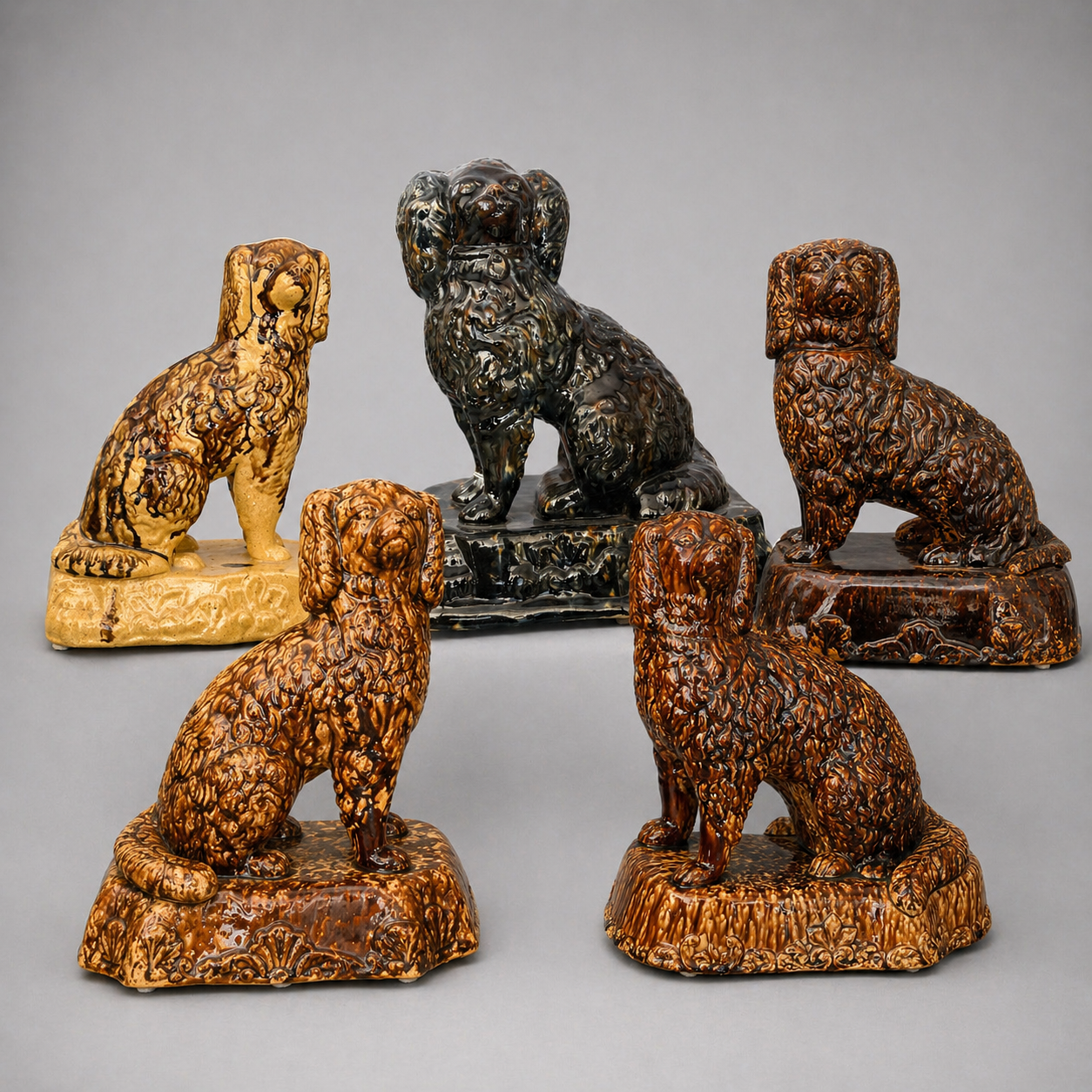
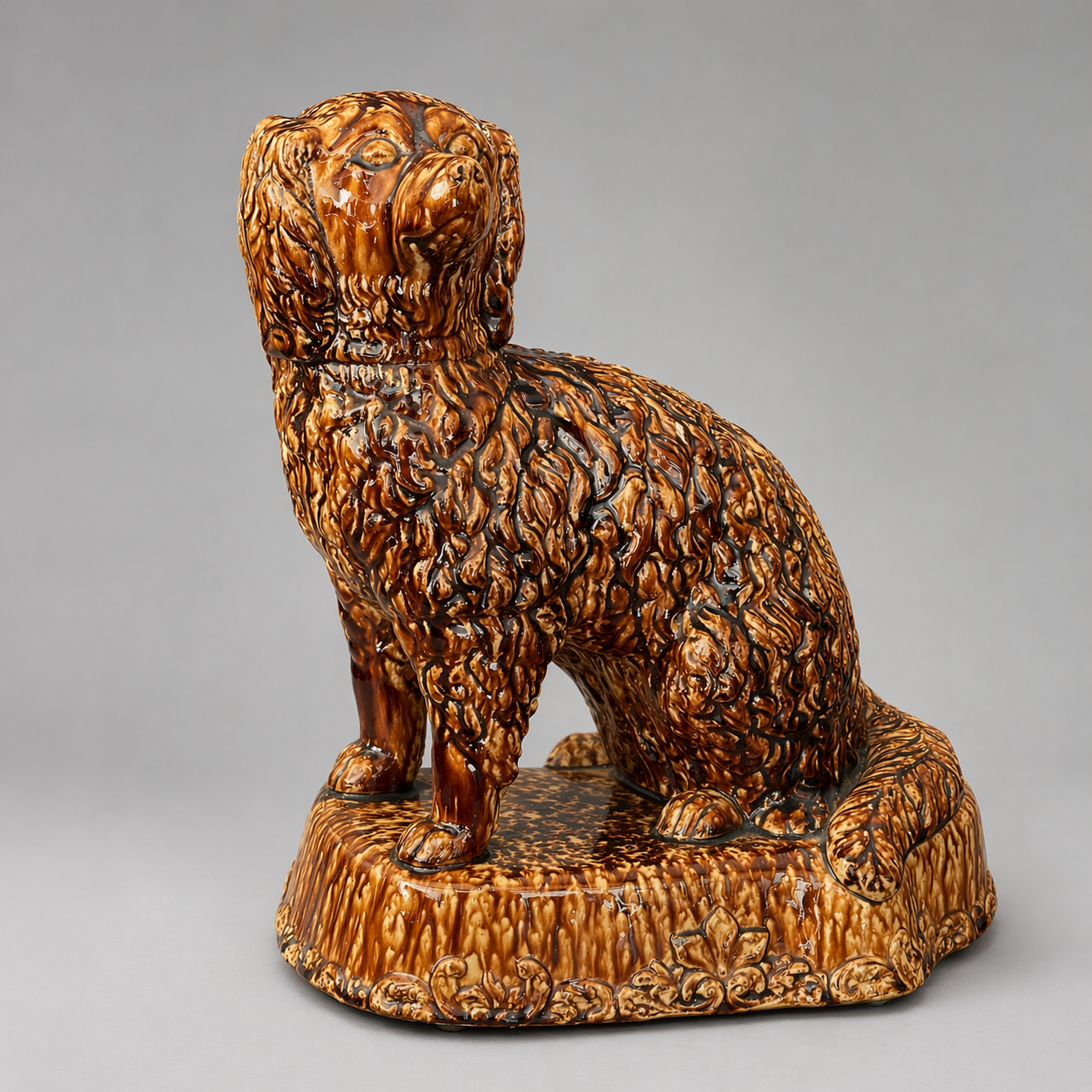
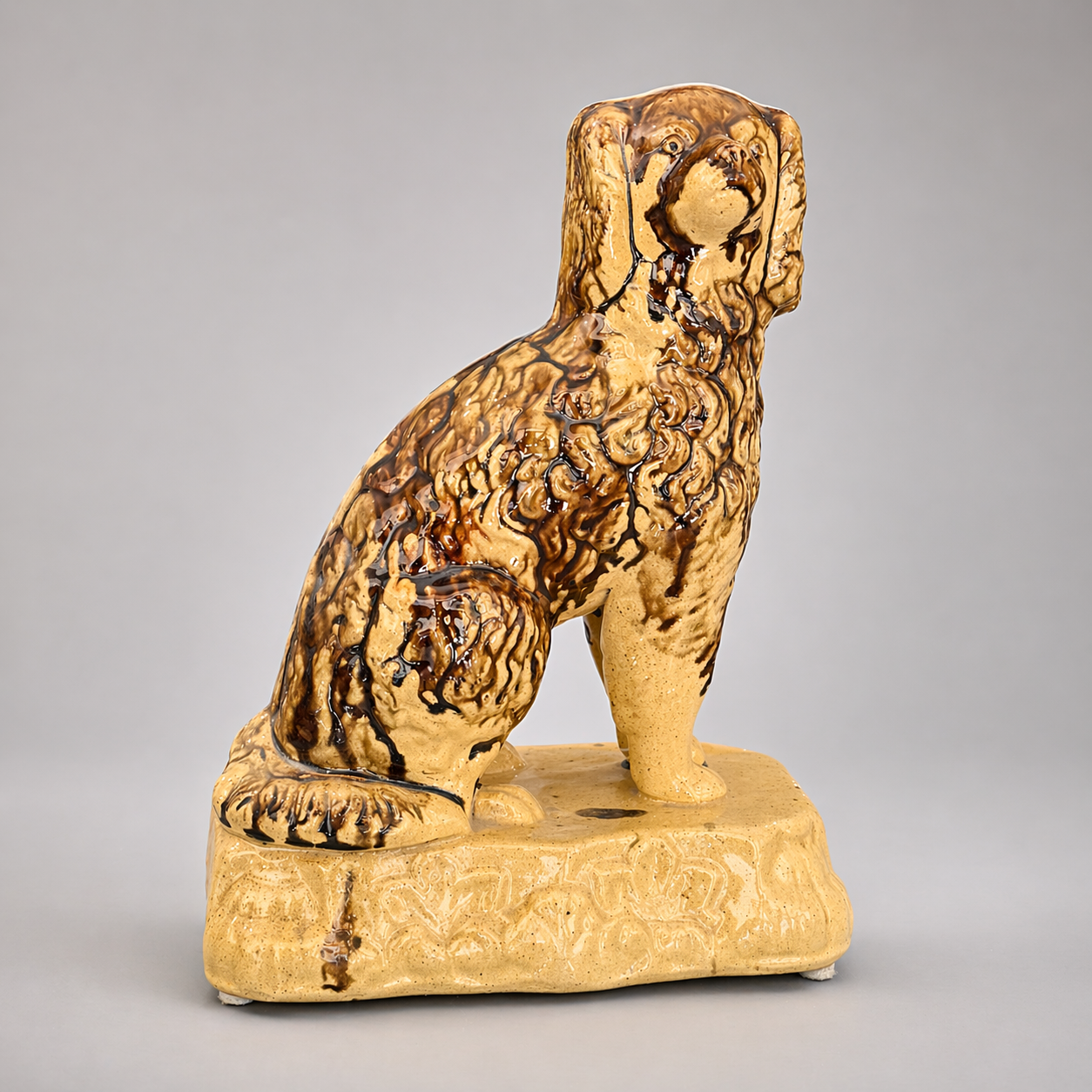
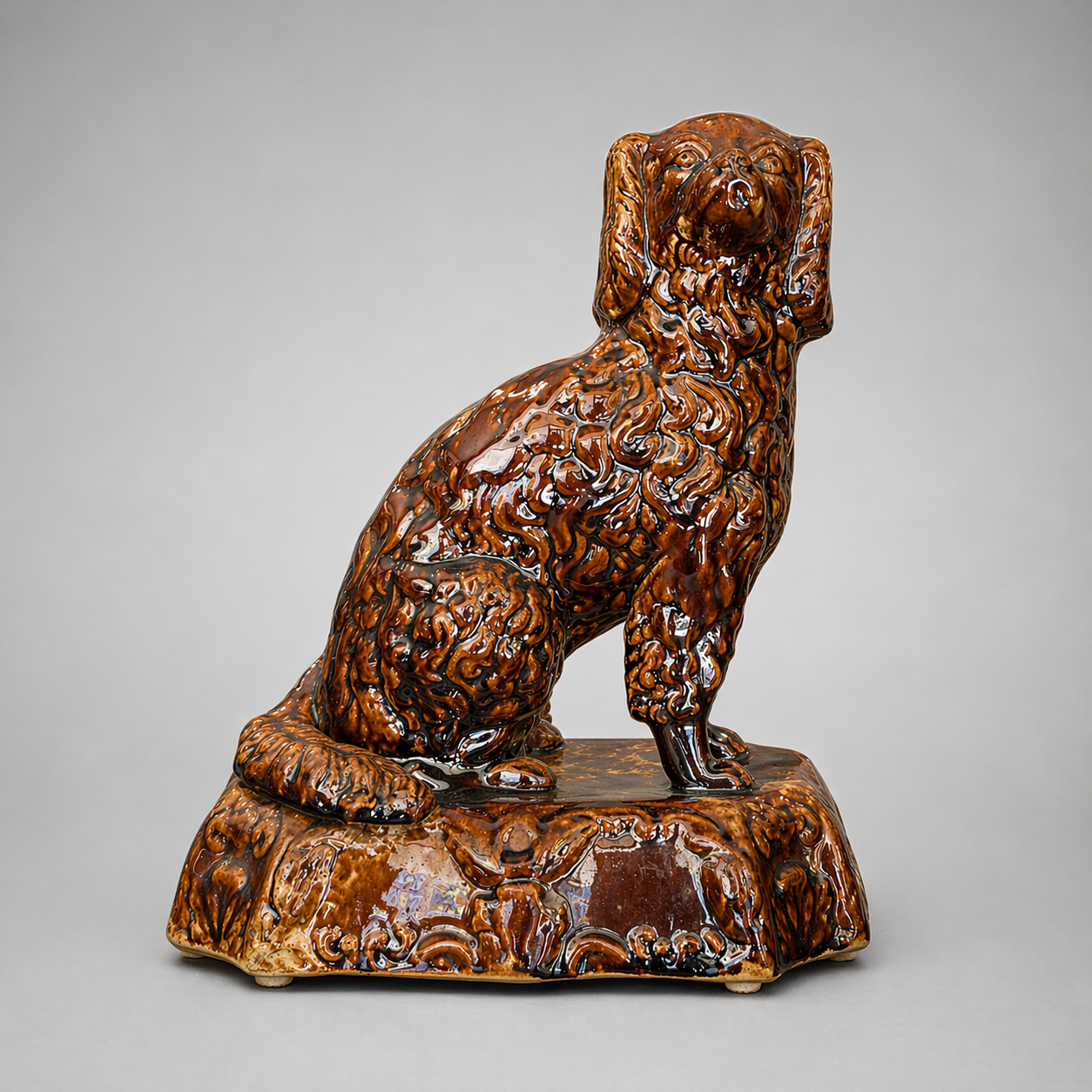
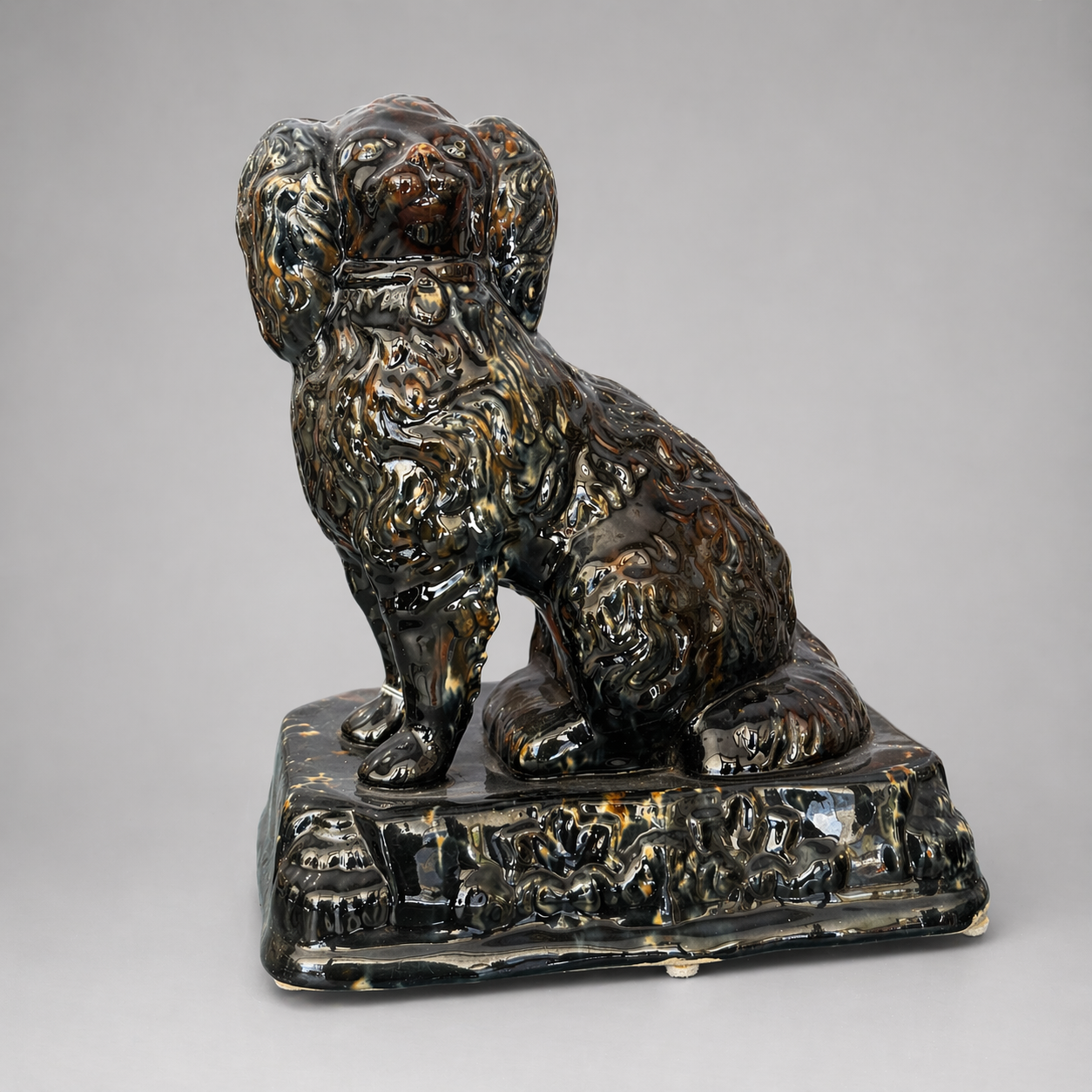
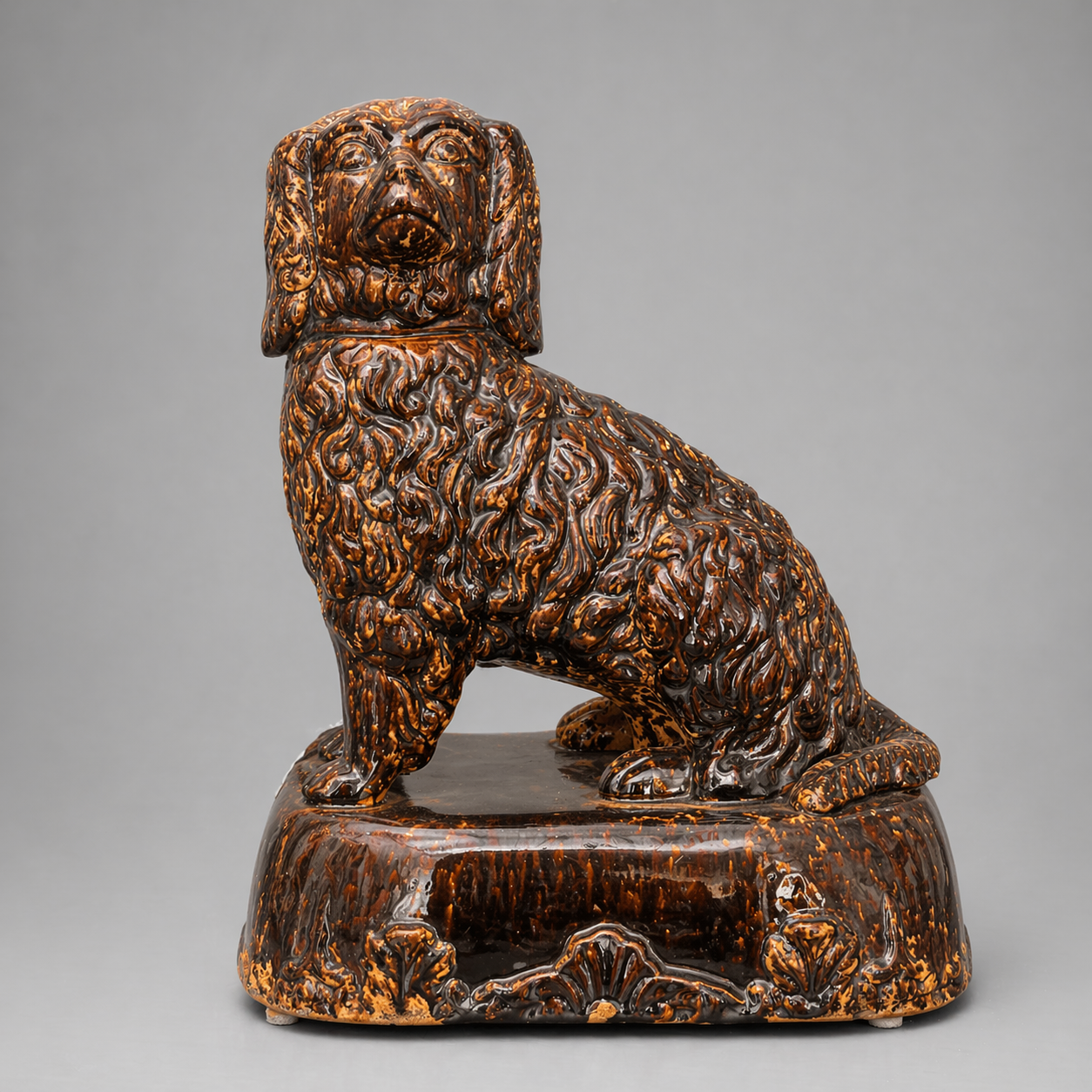
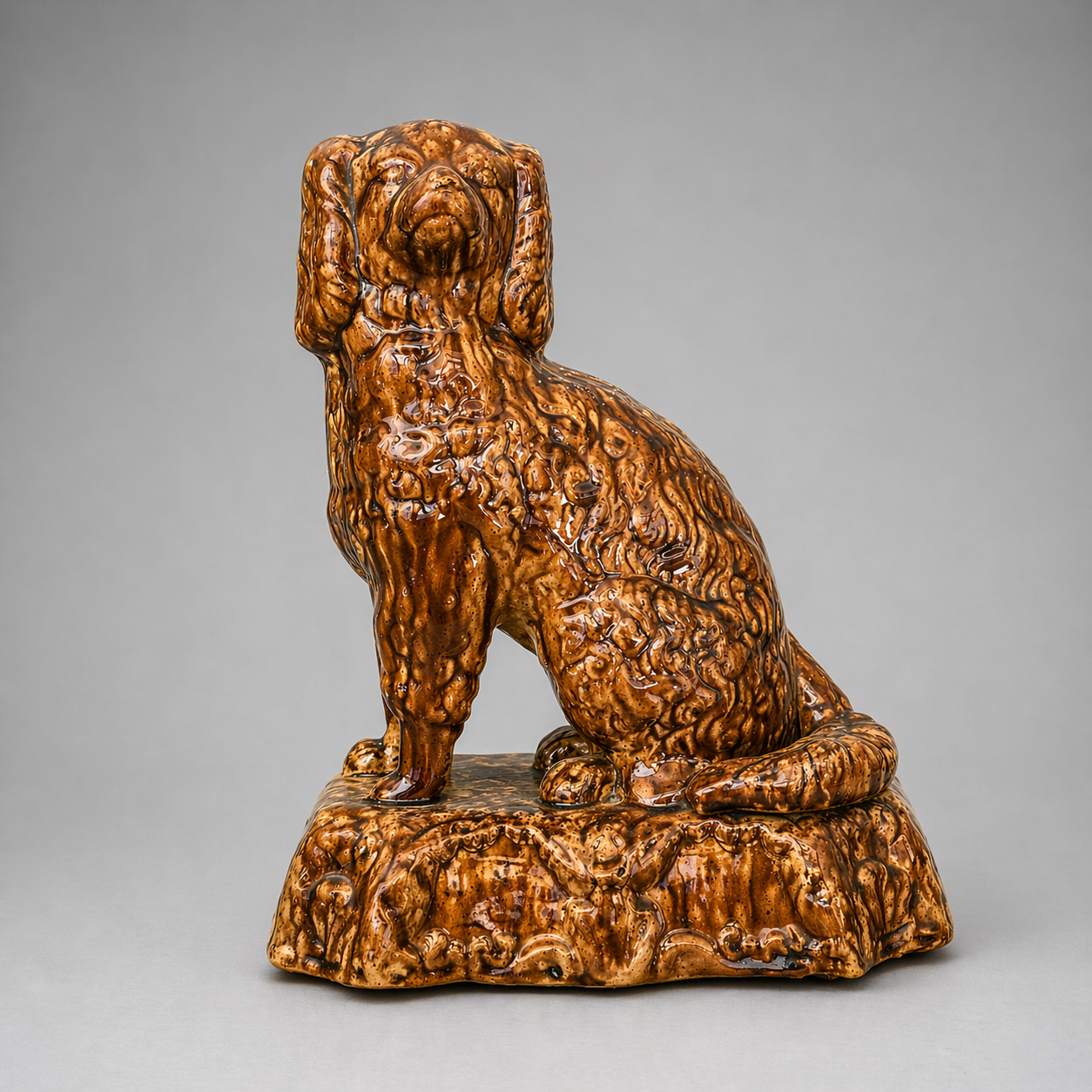
This compelling collection of Bennington-type pottery spaniel dogs represents a classic form within American decorative arts. Notably, each figure displays richly varied Rockingham glaze, creating a dynamic visual grouping. As a result, the ensemble offers both sculptural presence and historical depth, ideal for collectors and interiors alike.
The group comprises five molded earthenware figures, each depicting a seated spaniel with finely textured fur and expressive posture. Across the surfaces, artisans applied mottled brown, black, and honey-toned glazes, producing distinctive tonal variation from piece to piece. While unified in form, each dog retains individual character through subtle differences in modeling and glaze pattern.
Each figure rests on an integral base, decorated with molded relief motifs that enhance the overall composition. Consequently, the figures function not only as ornaments but also as cohesive decorative objects. Overall, the grouping reflects the Victorian fascination with animal forms and domestic symbolism.
Artisans produced these figures using molded earthenware (yellowware or buff-bodied clay), a staple of mid-19th-century American pottery. They then applied Rockingham glaze, allowing it to flow and pool naturally during firing. Because of this, each piece exhibits unique surface movement and depth.
Importantly, the glaze variation enhances the individuality of each figure while maintaining visual harmony across the set.
Scholars associate these figures with Bennington-type production in the northeastern United States, particularly Vermont and surrounding regions. During the mid-19th century, potteries produced such figures for domestic interiors, where they adorned mantels and tabletops. Therefore, these works reflect both regional craftsmanship and broader Victorian decorative trends.
The figures present in good antique condition, with wear consistent with age and use. Minor glaze irregularities and surface variations remain inherent to the production process. Moreover, these characteristics contribute to the authenticity and charm of the group.
Collectors prize Bennington-type dogs for their distinctive glaze and enduring folk appeal. In particular, grouped examples such as this offer heightened visual impact. Furthermore, the range of glaze tones—from honeyed amber to deep brown—adds depth and desirability.
This collection lends itself to both traditional and modern interiors. For example, it creates a striking focal point on a mantel or console. Additionally, it pairs well with early American ceramics and curated decorative objects.