
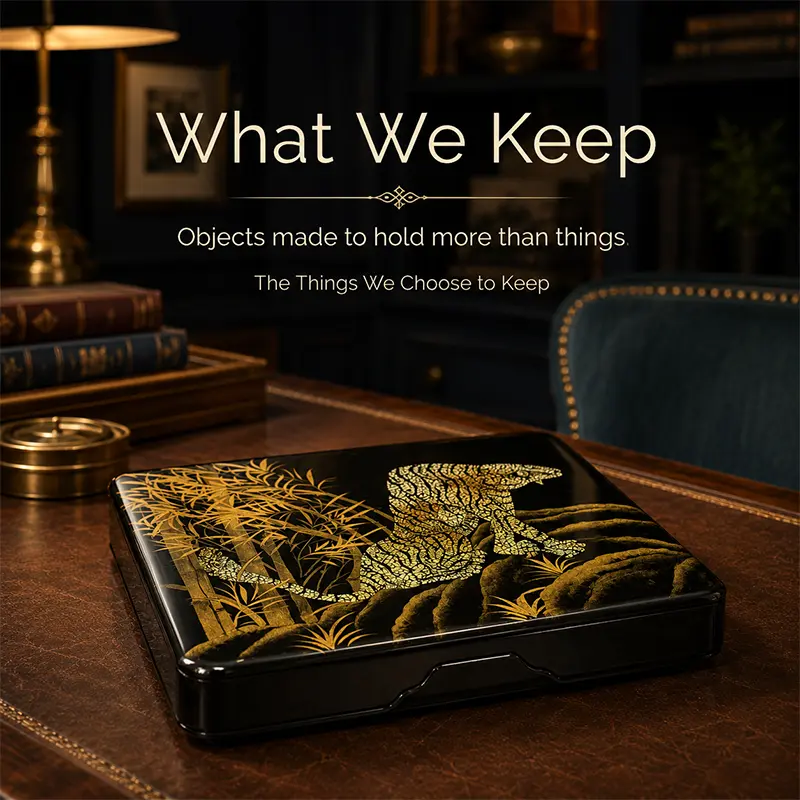
What We Keep
Objects made to hold more than things.
The Things We Choose to Keep
Boxes have always helped us bring order to life.
Some were created for very specific purposes. Writing boxes held brushes, ink, and paper. Small cases protected pills, snuff, cigars, jewelry, playing cards, letters, and other personal possessions.
Their forms often revealed their purpose. Their decoration revealed something more.
Lacquer, silver, carved wood, painted surfaces, inlay, and intricate metalwork transformed practical containers into objects of beauty.
Even the smallest box could suggest ceremony, privacy, status, or affection.
The things placed inside mattered.
So did the objects chosen to protect them.
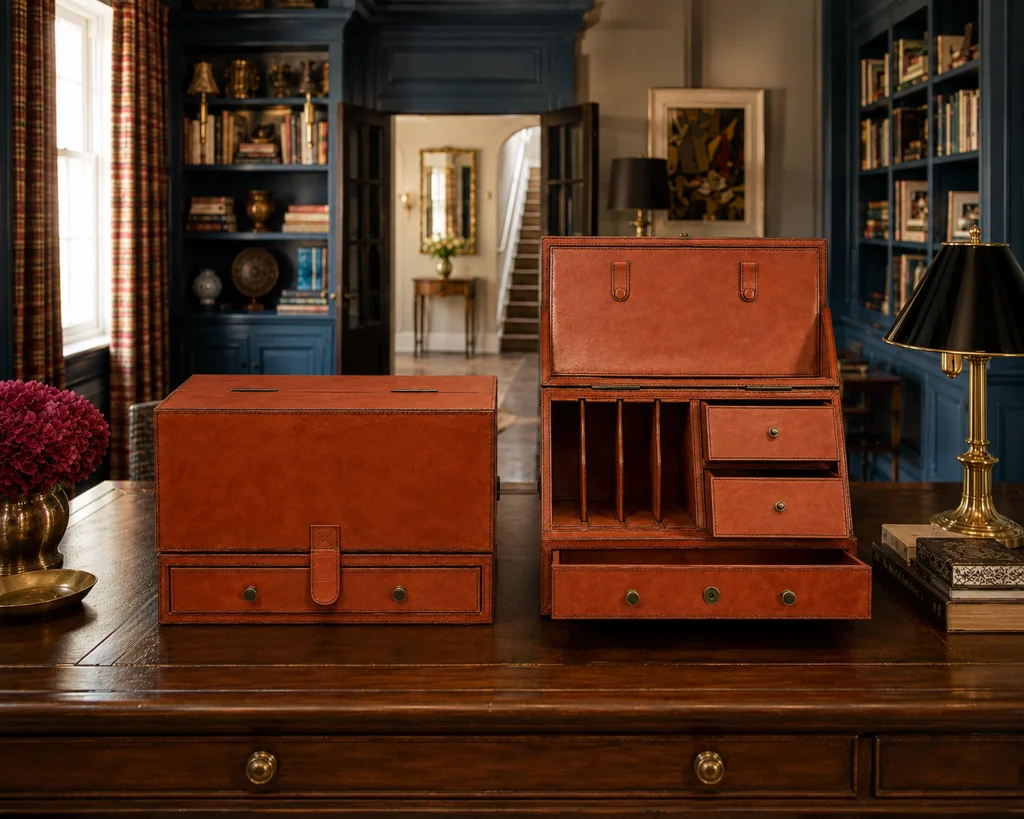
Made for a Purpose
Across cultures and centuries, boxes became companions to everyday life.
A Japanese writing box organized the tools needed for calligraphy. A lacquer sewing box held implements for careful handwork. Card cases protected playing cards. Small silver boxes carried pills or snuff. Other boxes guarded jewelry, correspondence, tobacco, personal papers, and treasured keepsakes.
Some were humble.
Others were extraordinarily elaborate.
Yet their underlying purpose remained remarkably similar: to gather something together, give it a place, and keep it safe.
The box created a boundary between what belonged inside and everything else.
Perhaps that is part of their enduring appeal.
Our Fascination With Boxes Remains
Centuries later, our fascination with boxes has not disappeared.
What we place inside them, however, has changed.
In my own home, one box holds batteries. Another contains remote controls. Keys have their own place. Pet medication stays in another.
On my desk, boxes organize stationery, pens, paper clips, calculators, charging cords, adapters, and the endless small accessories that accompany modern technology.
I even have a box for mobile devices.
None of these things would have made much sense to the original owners of an eighteenth- or nineteenth-century box.
Yet the impulse behind using one feels surprisingly familiar.
We still want to gather things together.
Place them where we know they belong.
We still want to protect certain objects, conceal others, and bring some measure of order to the accumulation of everyday life.
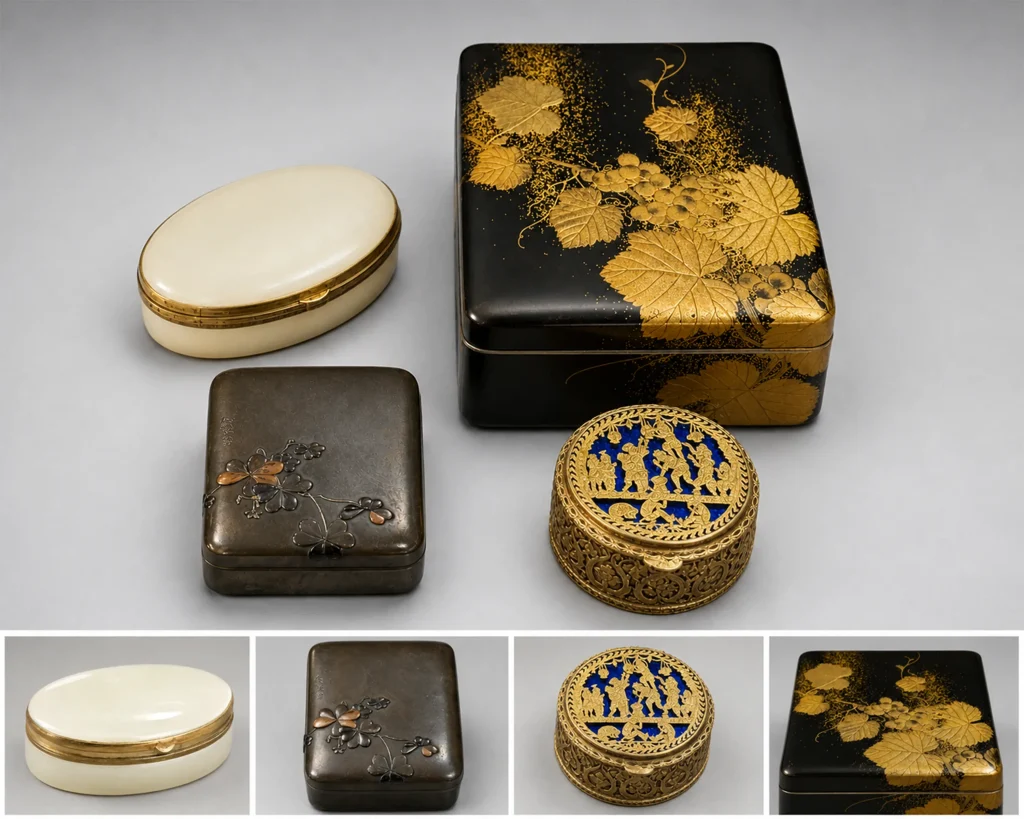
The Beauty of Containment
Batteries and charging cables may seem mundane beside handwritten letters, precious medicines, or jewelry.
But they belong to the lives we actually live.
Organization can give even ordinary objects a sense of intention.
A handful of loose batteries scattered in a drawer is clutter.
Place them inside a beautiful antique box, and something changes.
The batteries remain batteries.
But the act of containing them becomes deliberate.
A box creates a small piece of architecture around whatever we place inside it. It defines a space, establishes an order, and quietly removes visual noise.
Perhaps this explains why old boxes adapt so easily to new lives.
Their original contents may be gone, but their usefulness has not disappeared.
Old Boxes, New Lives
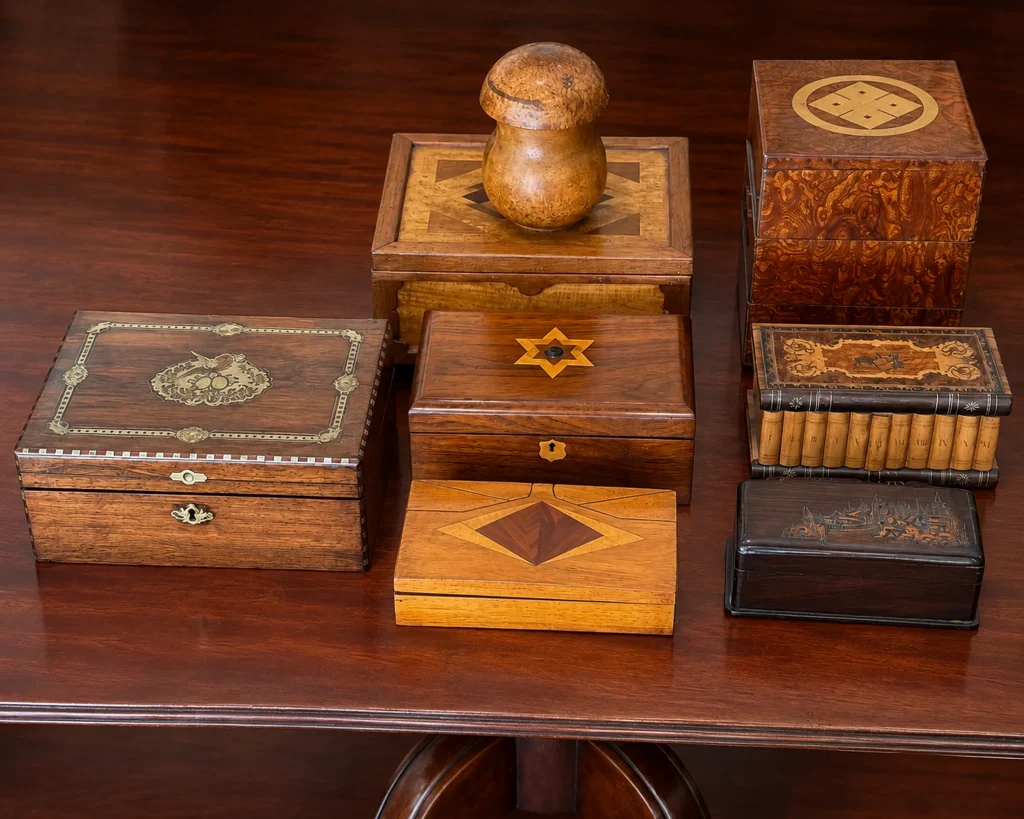
Collection of Antique Boxes Visit us in Hudson, NY
There is something particularly satisfying about giving an antique box a contemporary purpose.
A lacquer box no longer needs to hold the object it was originally designed for.
A card case need not contain cards.
A writing box does not have to remain empty because we no longer use inkstones and brushes at our desks.
These objects can continue doing what they have always done.
They can gather, organize, conceal, and protect.
And perhaps most importantly, they can make us consider what we choose to keep.
The contents evolve.
The box remains.
The contents have changed. The instinct to keep has not.