
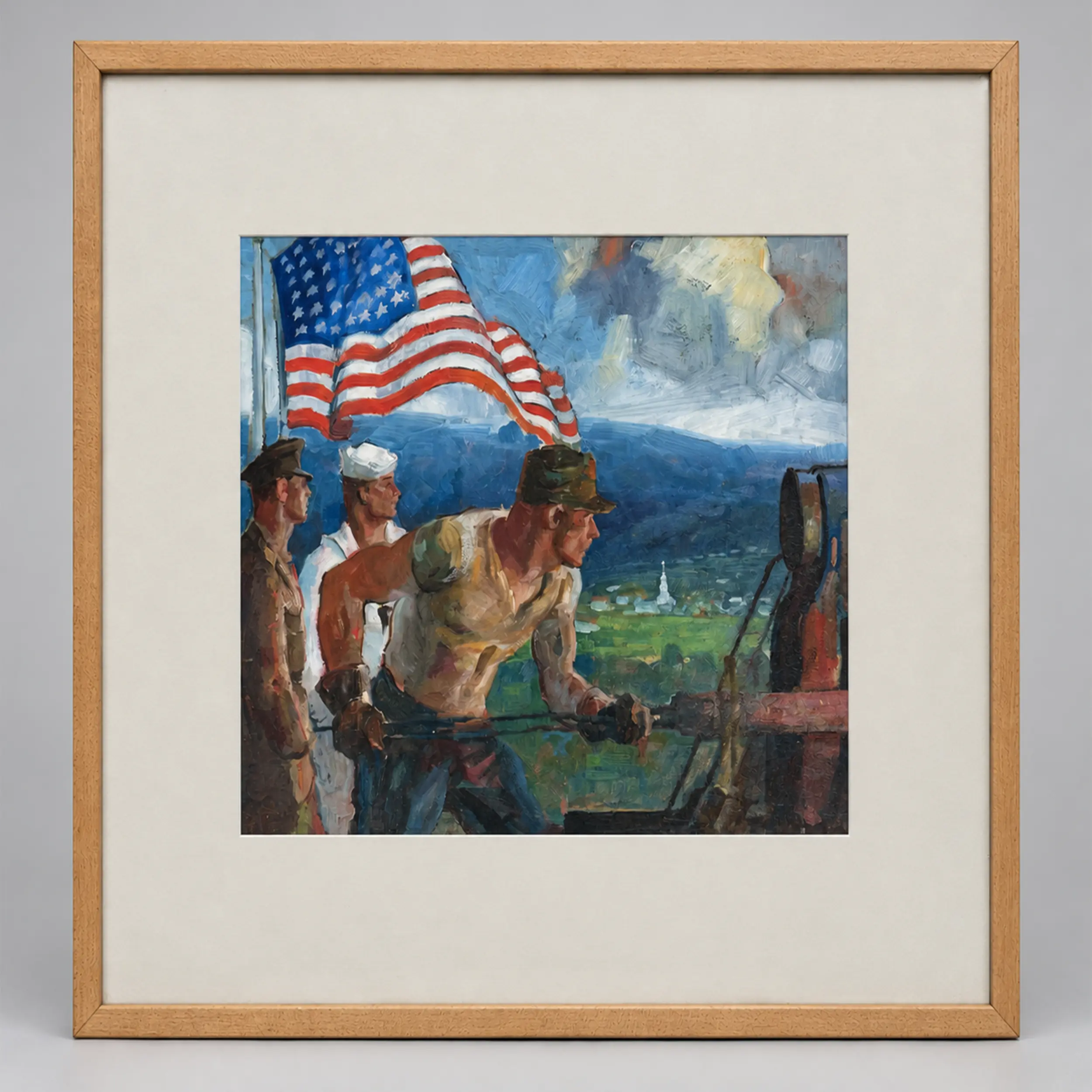
Art: It’s a Scene
Every artwork creates a world—and changes the one around it.
In our last series, What We Keep, we explored objects made to hold more than things. Boxes, chests, vessels, and cabinets often begin as practical objects. Over time, however, they become keepers of memory. They bear evidence of what they have held, where they have traveled, and how people have lived with them.
Artwork holds things too.
Living with art means living with other places, other periods, and other ways of seeing.
A painting can hold a place we have never visited. A photograph can preserve people whose names time has erased. A screen can hold the stillness of a landscape. Even an abstract work can hold movement, tension, rhythm, or atmosphere.
Art contains a scene, creates a scene, emerges from a scene—and eventually becomes part of ours.
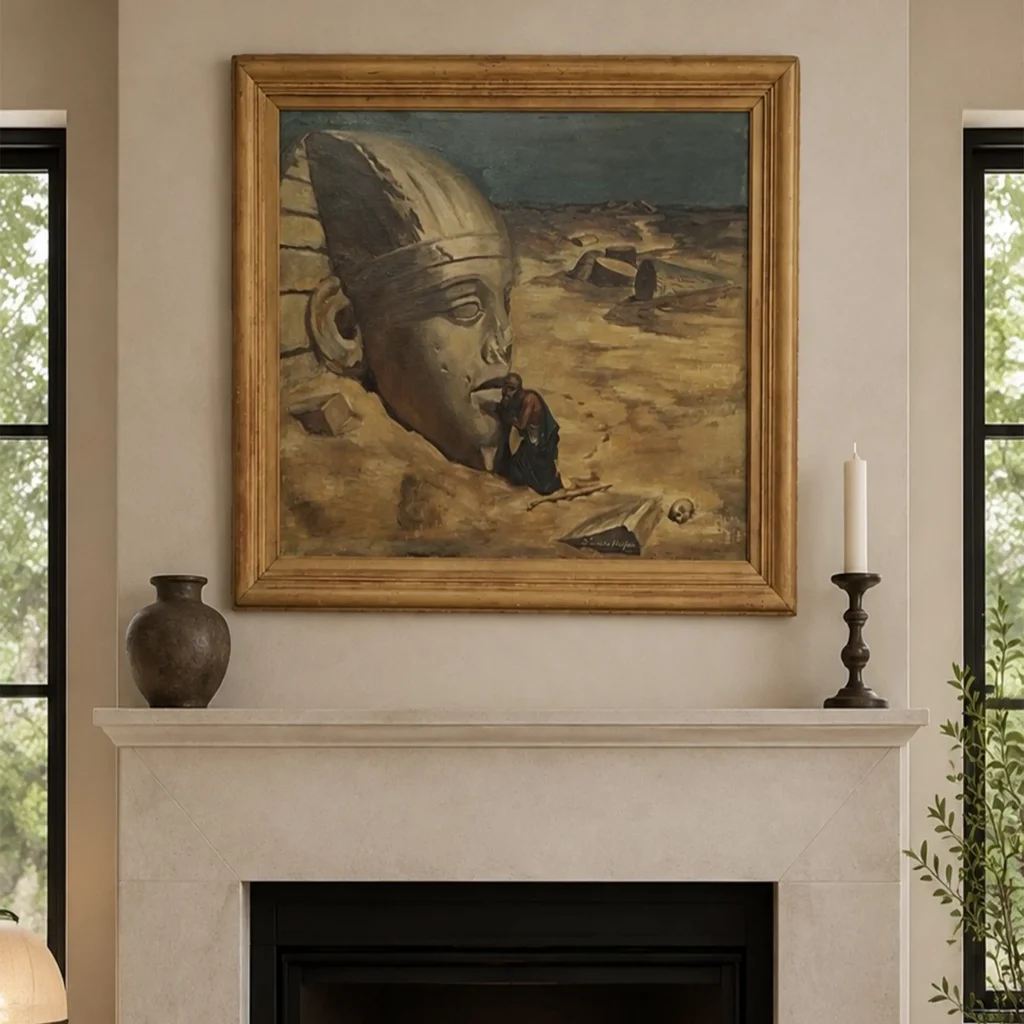
The Questioner of the Sphinx
The Scene Within
Some artworks invite us directly into a recognizable world.
In The Questioner of the Sphinx, a lone figure confronts one of history’s most enduring symbols of mystery. The scene suggests that something has already happened—or is about to. The artist gives us no explanation. Instead, we enter midway through the encounter and must imagine the question for ourselves.
A Henry Billings harbor painting carries an entirely different energy. Boats, figures, buildings, and rigging gather into a scene of human activity. The painting captures what feels like a passing observation: a moment of work and movement caught before the harbor rearranges itself again.
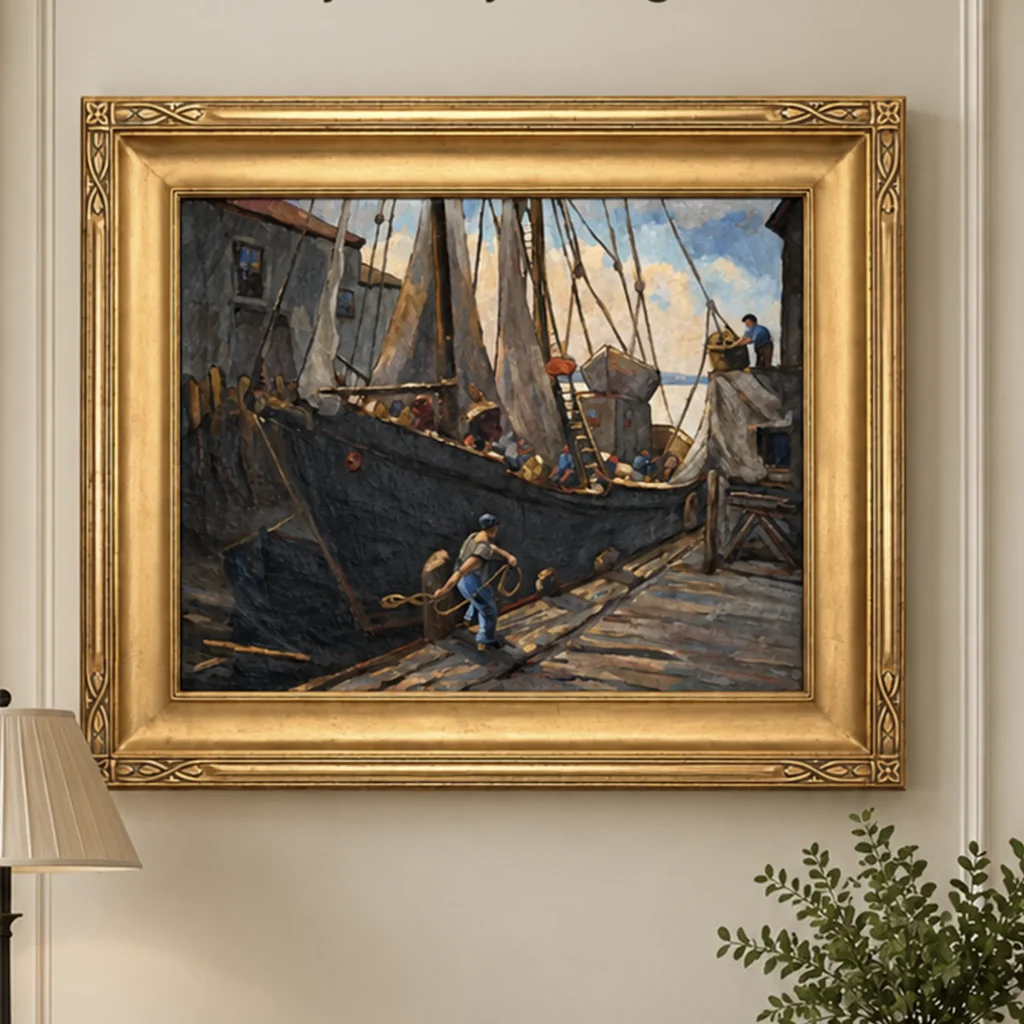
Henry Billings, Oil on Canvas
Meanwhile, the Swiss gouache offers another kind of passage. It takes us across water, into mountain towns, along architectural facades, and toward distant shorelines. The scale may be intimate, but the world it contains is expansive. Like old travel journals, they preserve not only the appearance of a place but also the sensation of having arrived there.
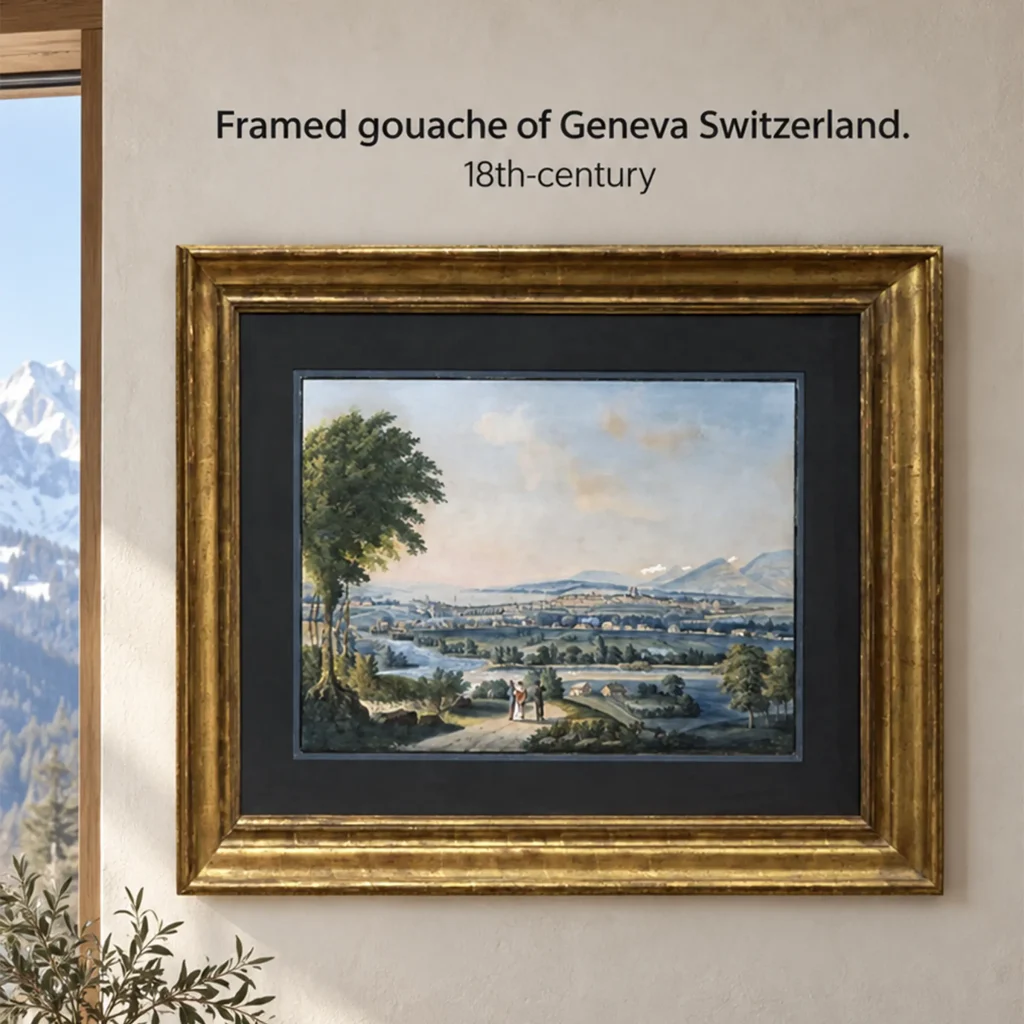
Watercolor of Lake Geneva, Switzerland
This may be one of art’s quietest powers: it allows us to enter a scene that is complete without us—and yet seems to have been waiting for our arrival.
The Scene We Construct
Artists do not find every scene; sometimes they carefully construct one.
A French still life brings flowers, fruit, objects, architecture, landscape, and even a monkey into one elaborate composition. It is less a record of an ordinary tabletop than a small piece of theater. The artist arranges nature, heightens its abundance, and makes the familiar feel slightly fantastical.
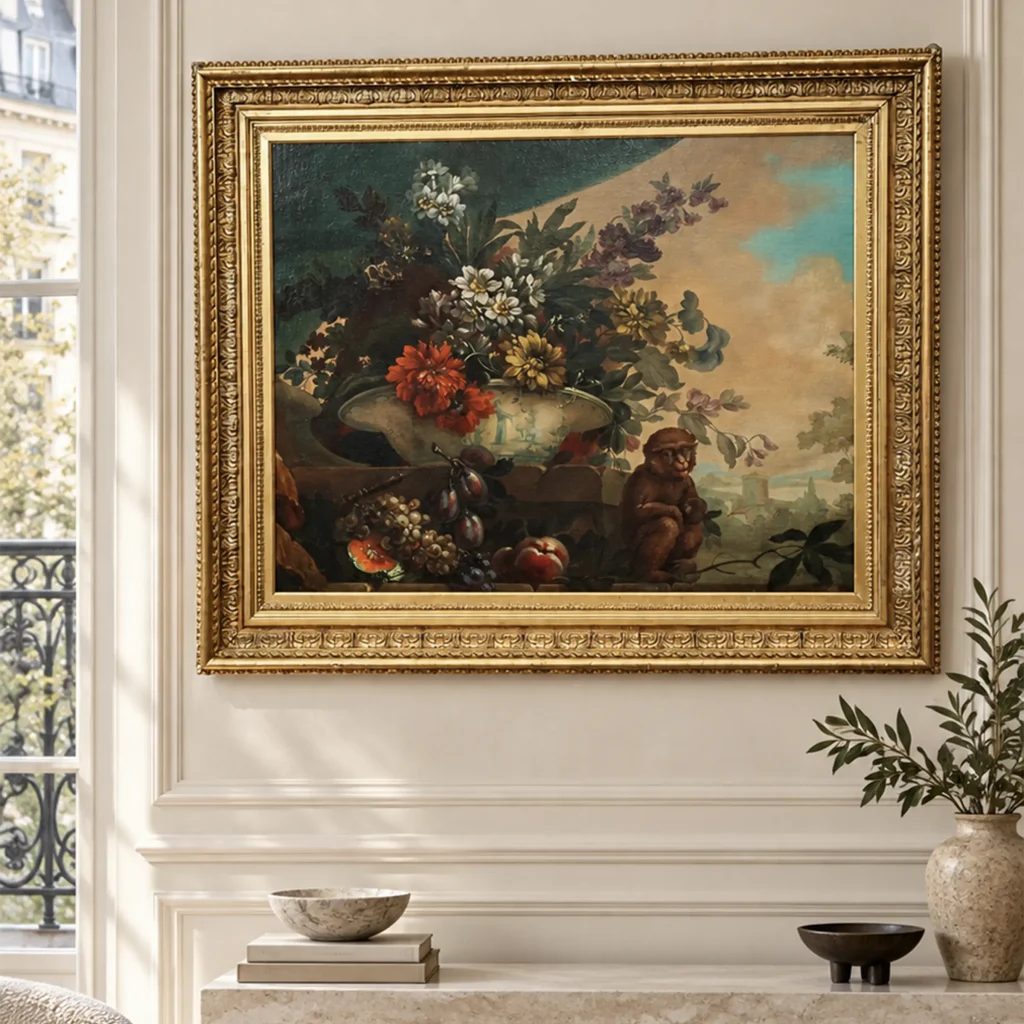
French Still Life
Similarly, portraiture and photography remind us that careful staging can appear spontaneous. In an old family photograph, the sitters assemble before the camera and choose how they want us to see them. Their clothing, posture, expressions, and placement all become part of the picture.
We may not know who they were, what happened before the photograph, or what awaited them afterward. Still, the image offers evidence of a particular moment: these people stood together, faced the camera, and made themselves visible.
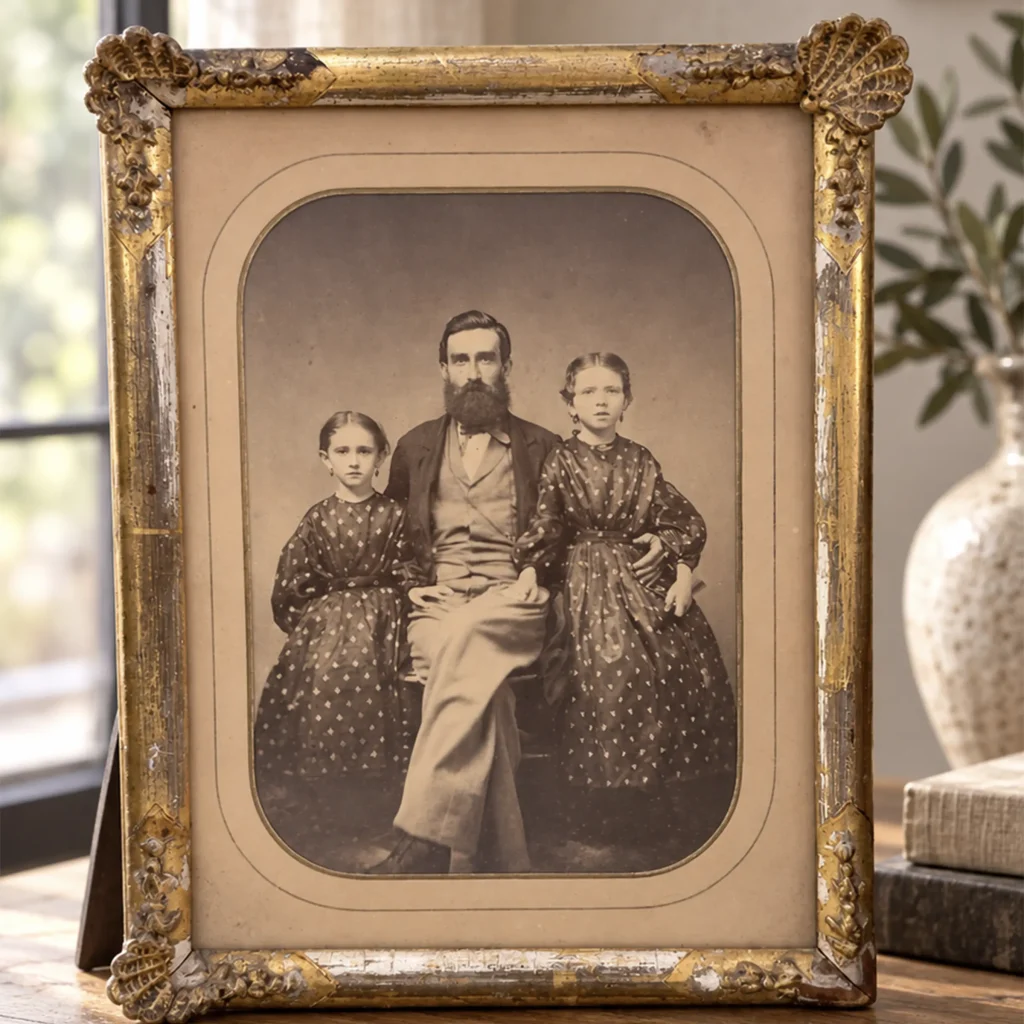
Framed vintage photograph of a family.
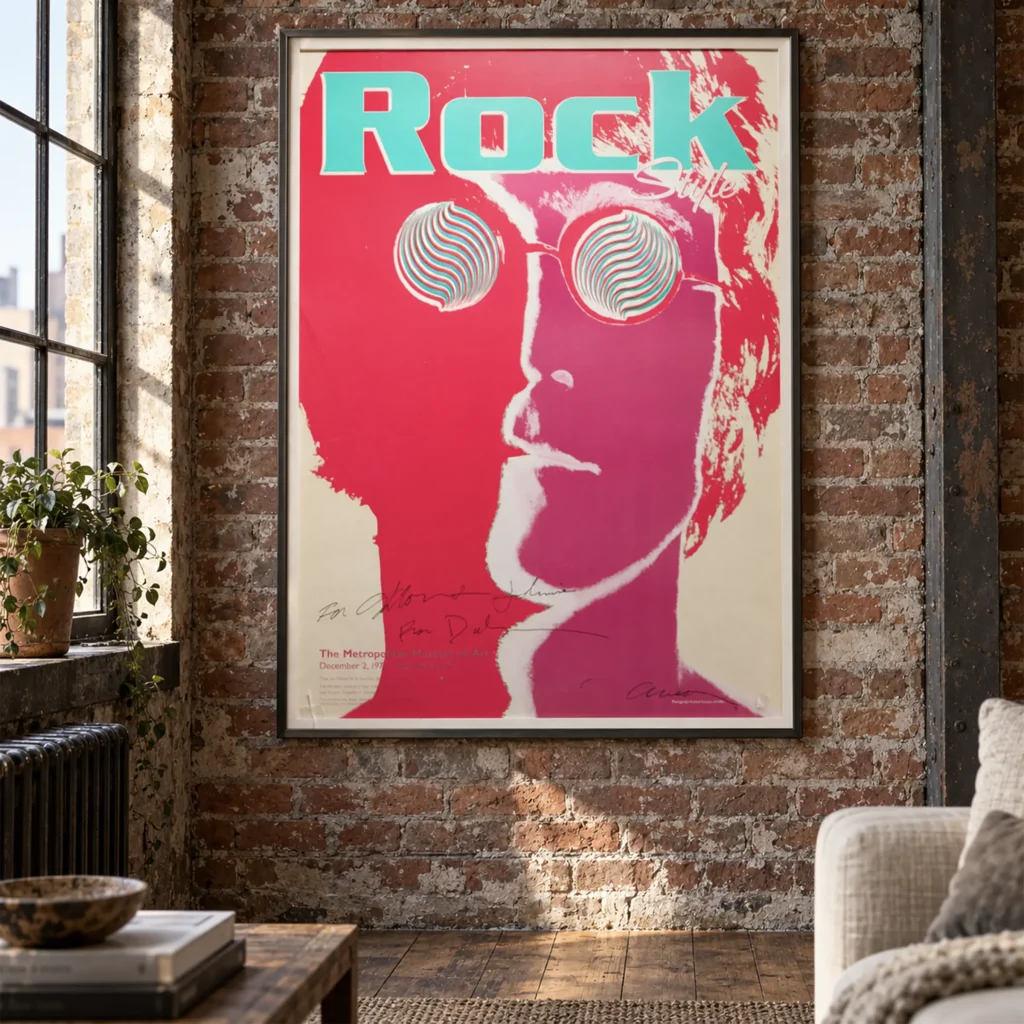
A signed Richard Avedon poster occupies yet another constructed world—the scene of fashion, photography, celebrity, performance, and the museum. It functions as both an image and a cultural artifact. Its presence reaches beyond the original photograph to encompass the exhibition, its audience, and the period that first encountered it.
Here, “the scene” is not simply what appears within the frame. It is also everything gathering around it.
The Scene Behind the Artwork
Every artwork emerges from a particular place and moment. Culture leaves traces in its materials, imagery, and methods.
An Indian miniature painting or Persian manuscript page asks us to look differently than we might at a Western easel painting. Figures, architecture, landscape, pattern, and written language share the page. A single image can contain ceremony, storytelling, devotion, court life, or poetry. Rather than merely describing space, the artist organizes it according to another way of seeing.
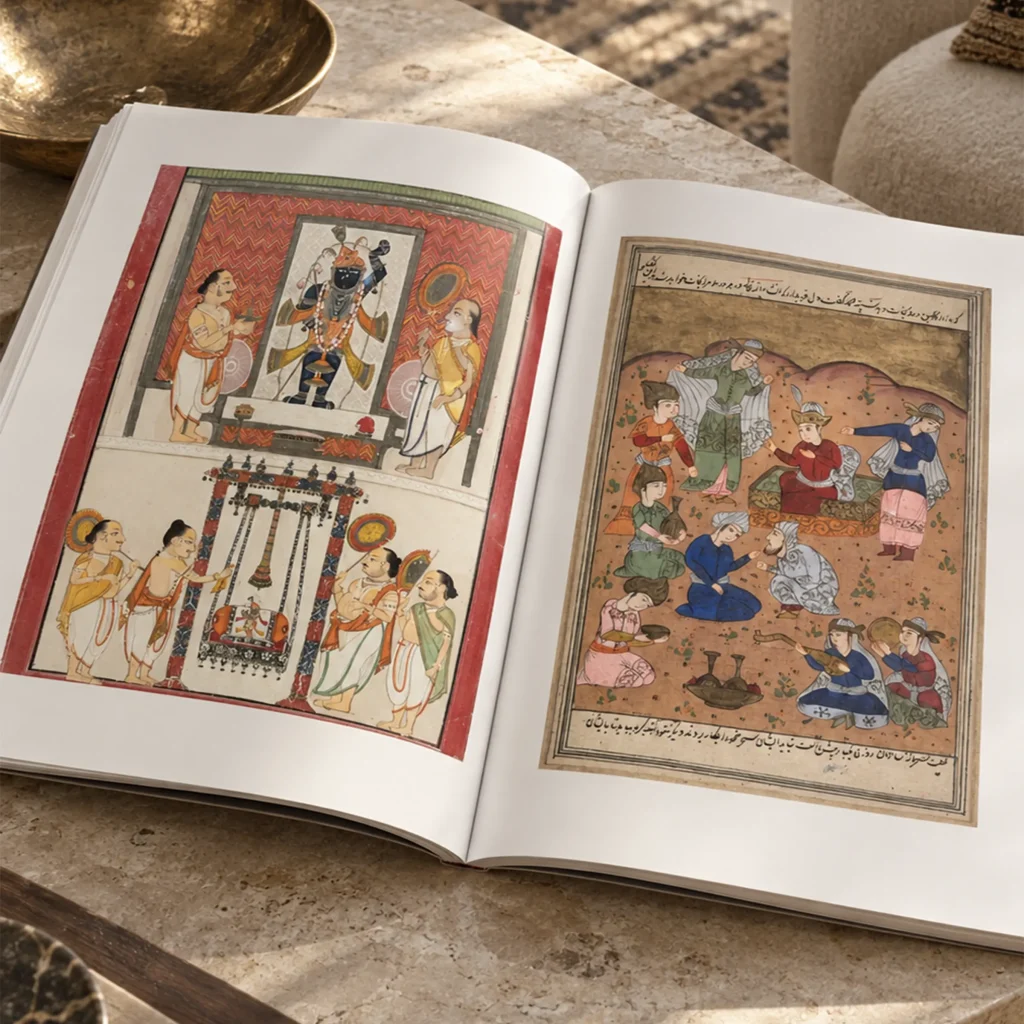
Indian miniature and Persian manuscript
A Japanese Taisho-period screen creates an environment of its own. Geese move through grasses beneath a broad expanse of gold, their forms unfolding across several panels. The landscape does not remain confined to a conventional frame. Instead, it changes as the screen opens and closes, catching light differently throughout the day.
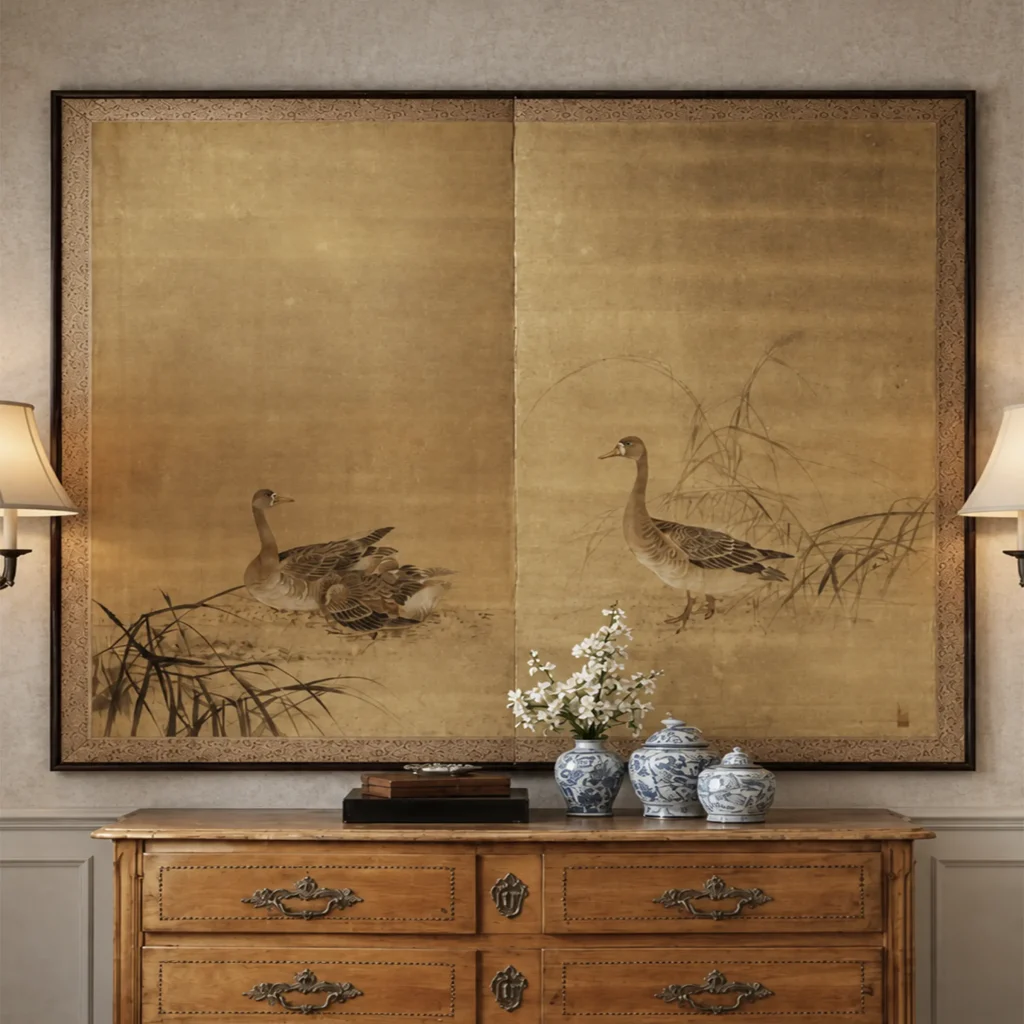
Japanese Taisho Screen
The screen also reminds us that people have long integrated art into the rooms where they live. For centuries, images have appeared on screens, vessels, textiles, lacquer, furniture, porcelain, and architectural surfaces.
A painted Chinese porcelain plaque, a bronze relief, a Japanese lacquer panel, and a 19th-century Chinese embroidery all exist somewhere between image and object. Moreover, their materials remain inseparable from the scenes they depict. Porcelain provides luminosity. Bronze gives weight and shadow. Lacquer creates depth and reflection. Embroidery builds an image one thread at a time.
These are not simply pictures of something. They are physical presences.
When the Scene Is Suggested
Of course, an artwork does not need to show a recognizable place or event to create a scene.
In an abstract drawing, geometry and color can generate their own activity. Shapes advance and retreat. Lines suggest direction. Areas of color establish balance, friction, or momentum. The eye moves through the composition much as it might move through a landscape or crowded room.
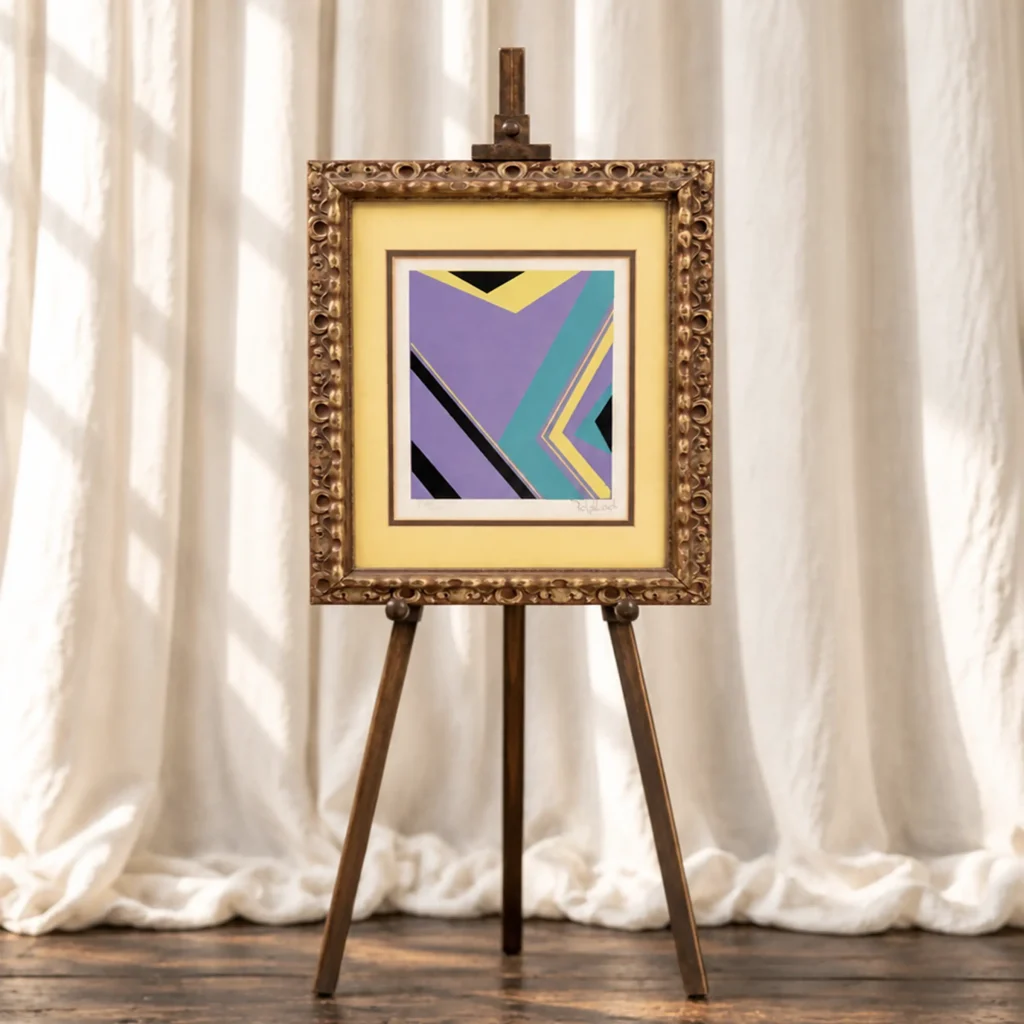
Signed Abstract Drawing
A framed mixed-media work creates a scene through fragments, surfaces, and interruptions. Likewise, a contemporary photo collage by a Hudson Valley artist gathers separate images into a new visual reality. Meaning arises not only from the individual parts but also from the relationships between them.
As a result, these works leave more space for the viewer. They do not tell us exactly where we are; instead, they ask us to complete the scene ourselves.
Perhaps that is why the same abstract work can feel energetic to one person and meditative to another. What we bring ultimately shapes what we see.
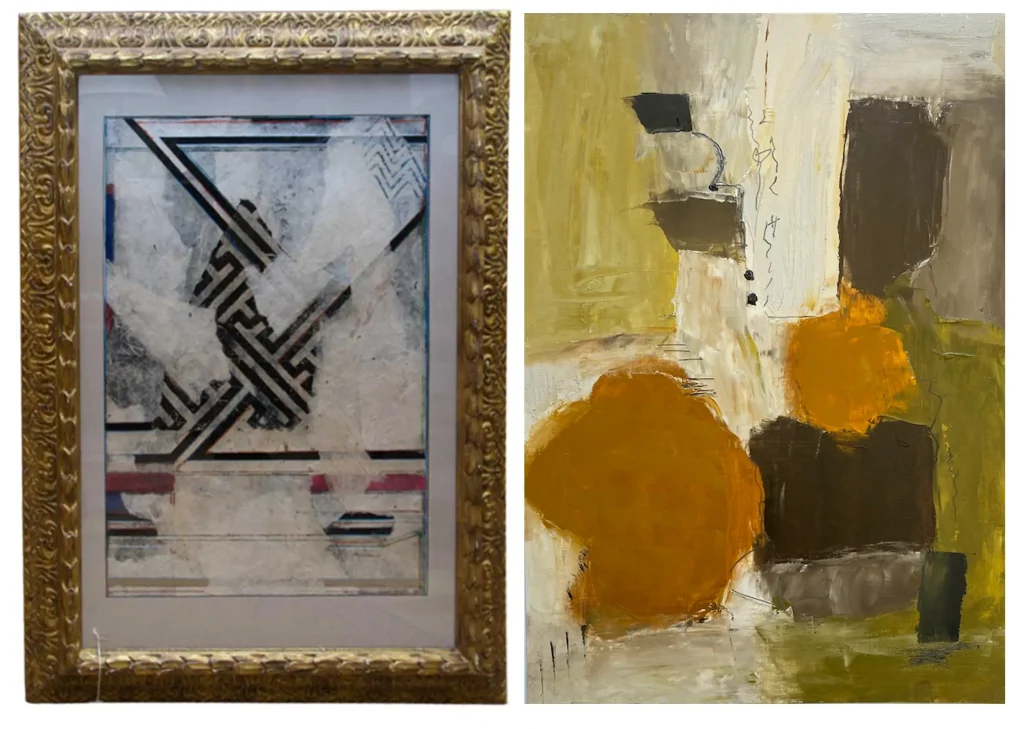
Mixed Media by Robert Kelly Oil on linen paper by Nancy O’Ohara
The Scene Within the Room
Once an artwork leaves the artist’s hand, it begins another life.
For example, a small drypoint of tulips by Mily Possoz can create a quiet, intimate pause within a room. A bold modern lithograph can sharpen everything around it. Meanwhile, a Japanese screen can give an interior a sense of distance and atmosphere. A botanical print can bring order, curiosity, and the natural world to an otherwise empty wall.
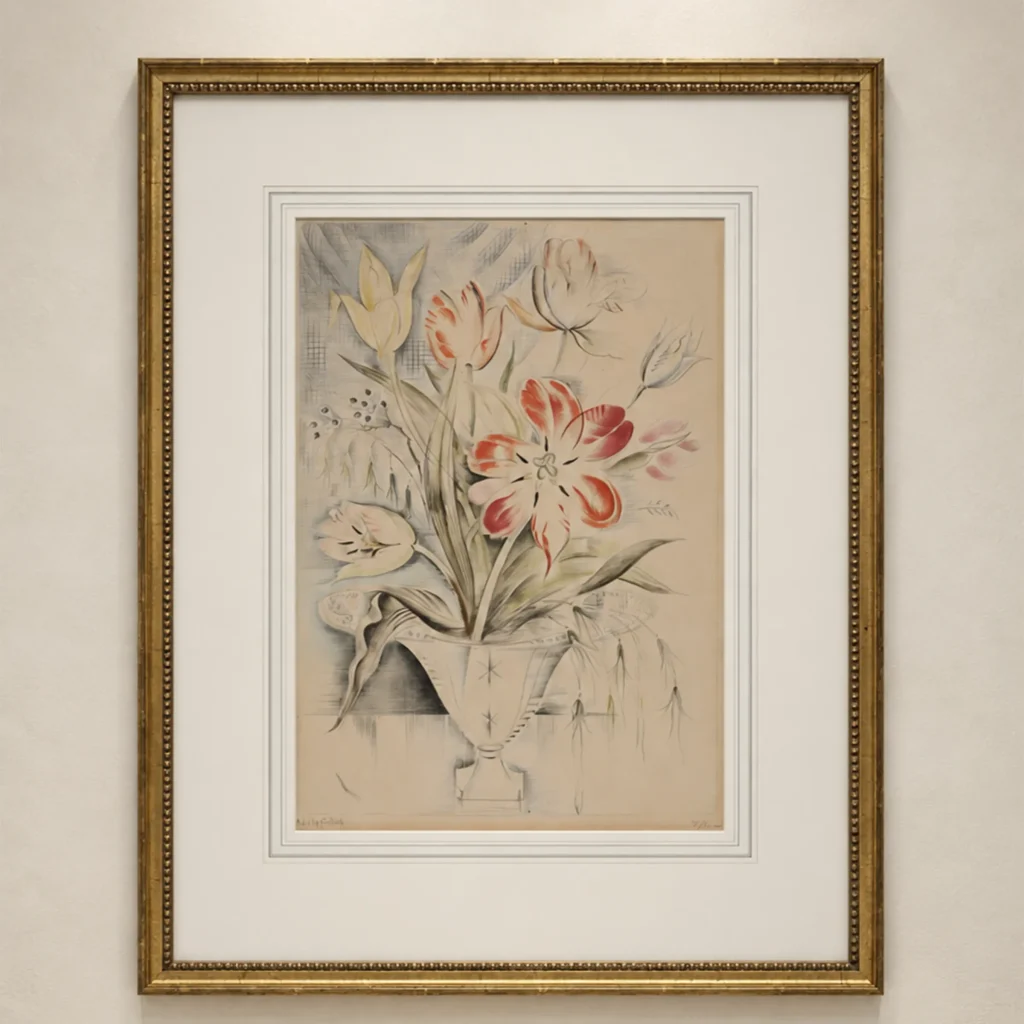
Drypoint by Mily Possoz, Les Tulipes
This is why choosing artwork differs from simply filling space.
The right work can change the emotional temperature of a room. It can make the room feel calmer, stranger, more expansive, more playful, or more alive. It may harmonize with its surroundings or interrupt them. Sometimes the most compelling placement is the least expected: an old photograph in a contemporary room, an abstract work above an antique chest, or a formal portrait somewhere decidedly informal.
Artwork does not need to match the furniture. It needs to enter into conversation with it.
Becoming Part of Our Scene
An artwork often draws us in before we understand why.
Perhaps it recalls somewhere we have traveled—or somewhere we still hope to go. Its subject may feel familiar, its atmosphere comforting, or its strangeness impossible to ignore. Sometimes the material, the frame, a particular shade of blue, or the expression on a face stops us.
The attraction does not always arrive with an explanation.
Over time, we connect the artwork to the circumstances in which we found it. We remember the shop, the journey, the person who pointed it out, or the room we chose it for. It witnesses dinners, conversations, changes of season, and rearrangements of furniture. What began as someone else’s vision gradually enters our own visual history.
That may be the final scene every artwork creates: the life that gathers around it.
The works in this collection cross countries, centuries, and materials. They include paintings, prints, photographs, screens, textiles, collage, porcelain, lacquer, and bronze. Some tell their stories clearly, while others remain enigmatic. Together, they remind us that art is never simply an image on a wall.
It contains a scene.
It emerges from a scene.
It creates a scene.
And, if we choose to live with it, it becomes part of ours.