Victorian Mother-of-Pearl Calling Card Case
Country / Year: England, 19th century
Condition: Very Good
Measurements: H: 4″ / W: 3″ / D: “

$450.00
$450.00
Victorian Mother-of-Pearl Calling Card Case
Country / Year: England, 19th century
Condition: Very Good
Measurements: H: 4″ / W: 3″ / D: “

England, circa 1860–1900
This elegant mother-of-pearl calling card case reflects the refinement of Victorian social customs and personal luxury. Notably, the piece combines luminous natural materials with precise craftsmanship, creating a refined object intended for both function and display. As a result, it embodies the quiet sophistication associated with 19th-century etiquette.
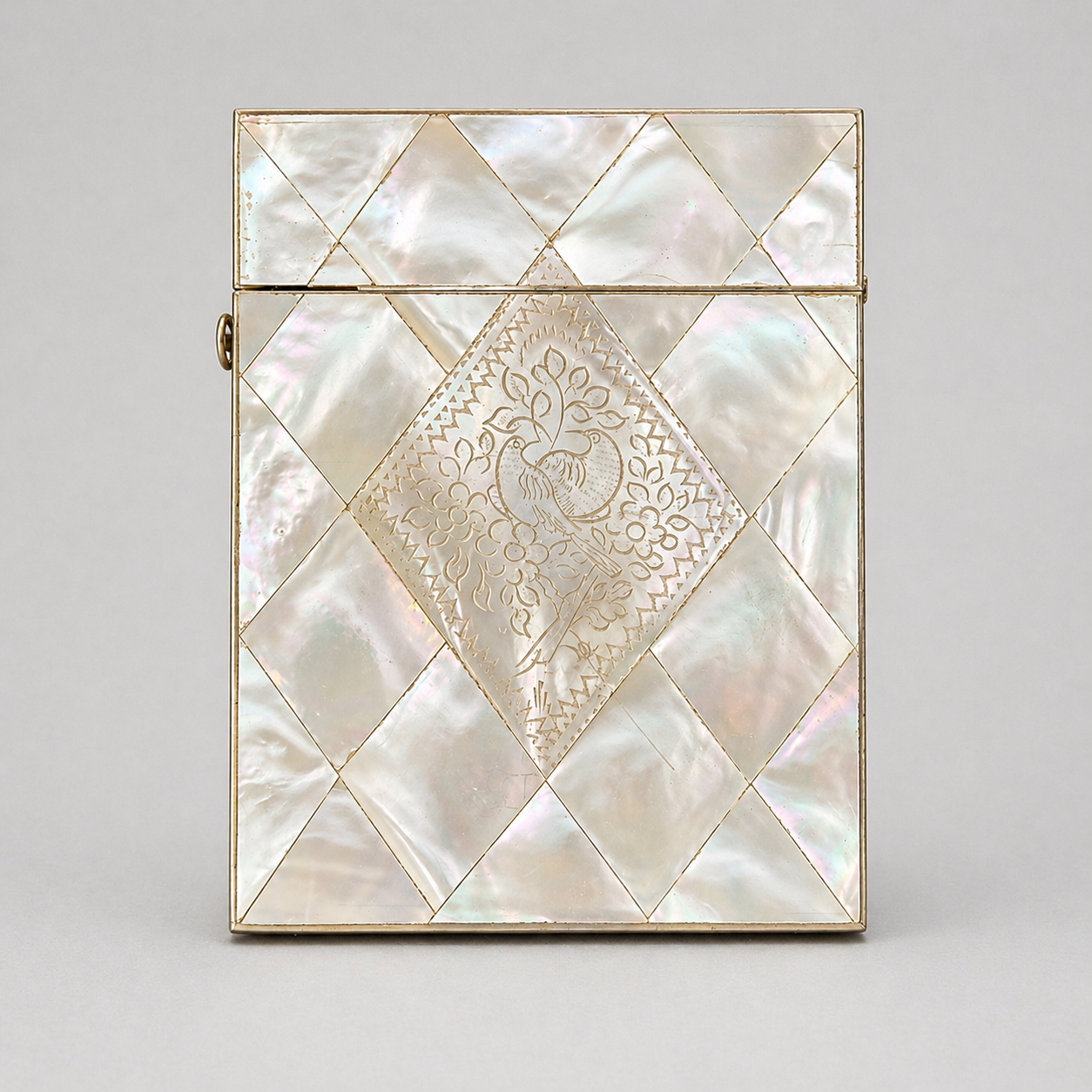
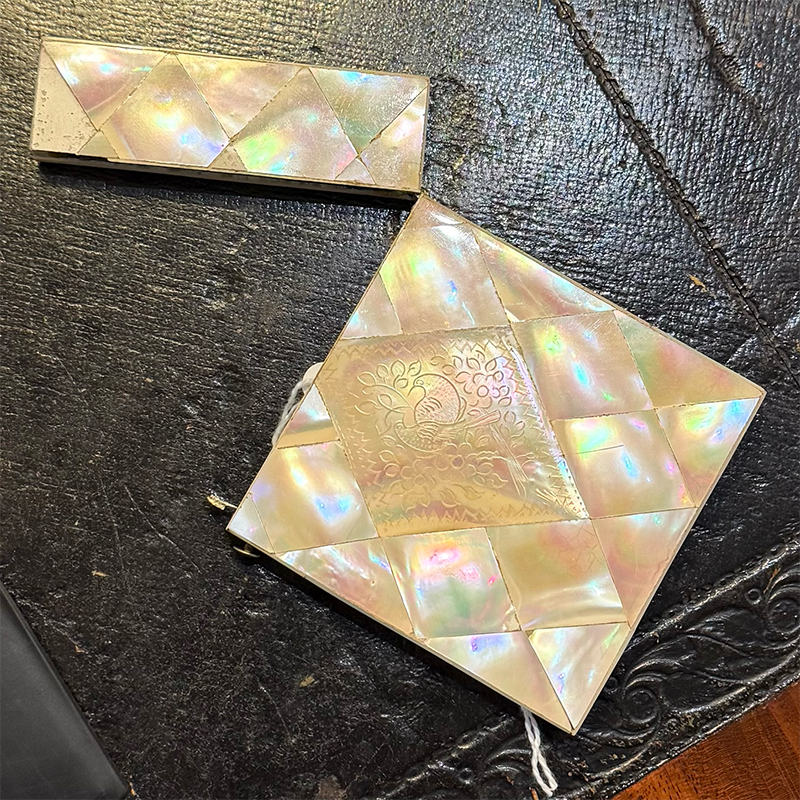
The case presents a slim rectangular form, designed for ease of handling and discreet portability. Across the surface, artisans arranged carefully cut panels of natural mother-of-pearl into a structured geometric grid. At the center, a diamond-shaped cartouche features finely engraved decoration, depicting a bird surrounded by delicate floral motifs.
This engraved reserve introduces visual depth while maintaining overall restraint. A narrow metal frame encloses the case and supports a hinged opening. Consequently, the design achieves both durability and elegance without unnecessary ornamentation.
Artisans selected natural mother-of-pearl (nacre) for its strength and luminous qualities. They then cut and fitted each panel by hand, ensuring a seamless surface with subtle tonal variation. Because of this, the case reflects light in soft iridescent hues that shift with movement.
Importantly, the engraved central panel demonstrates skilled handwork, adding both narrative and decorative interest.
Scholars attribute this form to English production during the Victorian period, when calling card cases served as essential social accessories. During this time, individuals used such cases to present visiting cards in formal settings. Therefore, these objects functioned as subtle indicators of taste and refinement.
The case remains in very good antique condition, with light wear consistent with age. The hinge operates smoothly, and the structure remains sound. Moreover, the mother-of-pearl retains strong iridescence, enhancing its visual appeal.
Collectors value Victorian card cases for their intimate scale and cultural significance. In particular, this example stands out for its balanced design and engraved detail. Furthermore, it represents a period when everyday objects carried both functional and symbolic meaning.
This piece adapts easily to both traditional and contemporary interiors. For example, it serves as a refined accent on a desk or within a curated display. Additionally, it pairs well with antique writing instruments and decorative boxes.