English Coastal Mother-of-Pearl Shell Inkstand
Country / Year: England, 19th century
Condition: Very Good
Measurements: H: 1.5 ” / W: 7″ / D: 5″

$700.00
$700.00
English Coastal Mother-of-Pearl Shell Inkstand
Country / Year: England, 19th century
Condition: Very Good
Measurements: H: 1.5 ” / W: 7″ / D: 5″
Late Victorian to Early Edwardian Period, circa 1880–1920
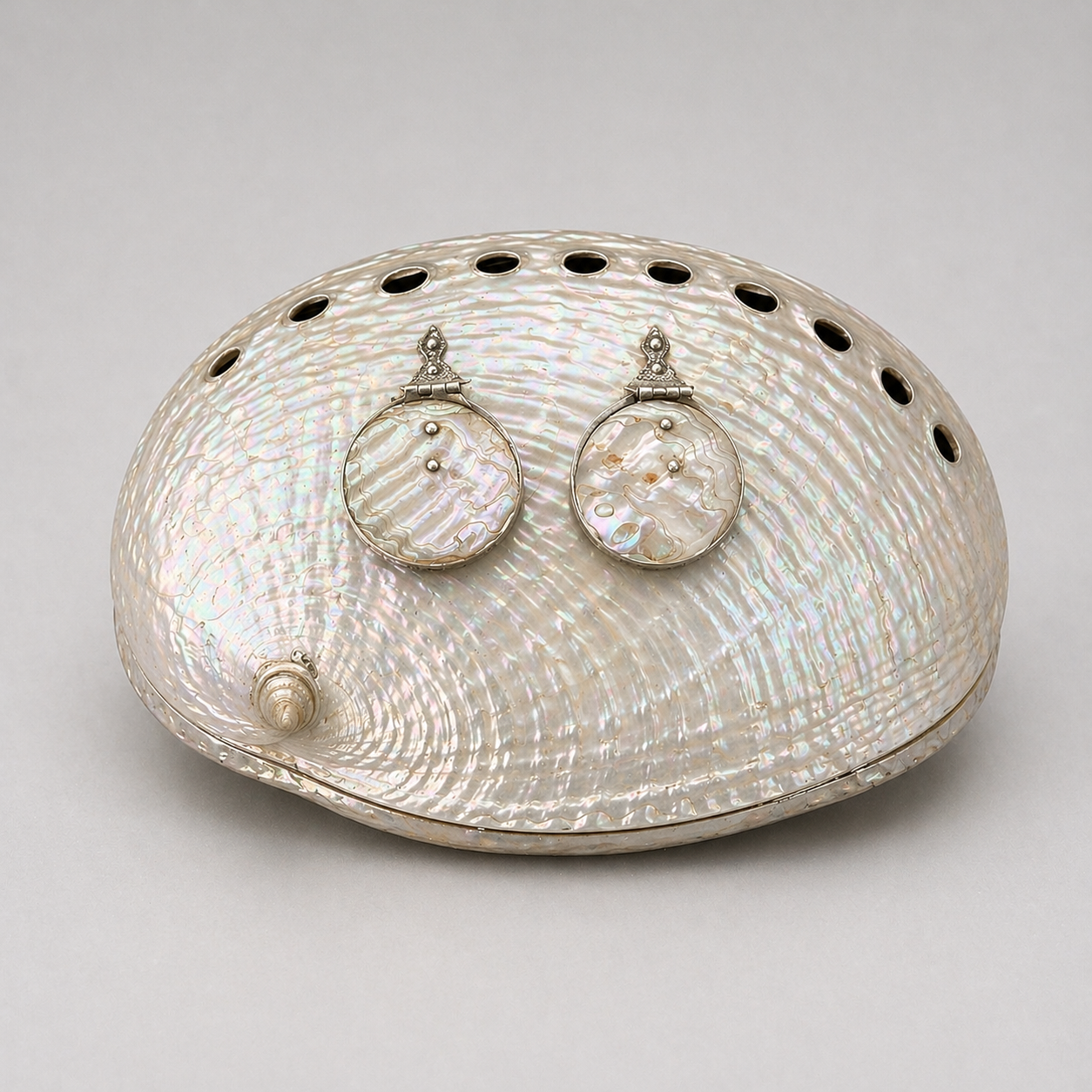
This striking mother-of-pearl shell inkstand captures the romance of coastal craftsmanship during the late nineteenth and early twentieth centuries. Notably, artisans transformed a natural abalone shell into a functional desk object, blending organic beauty with refined utility. As a result, the piece embodies both decorative charm and historical significance.
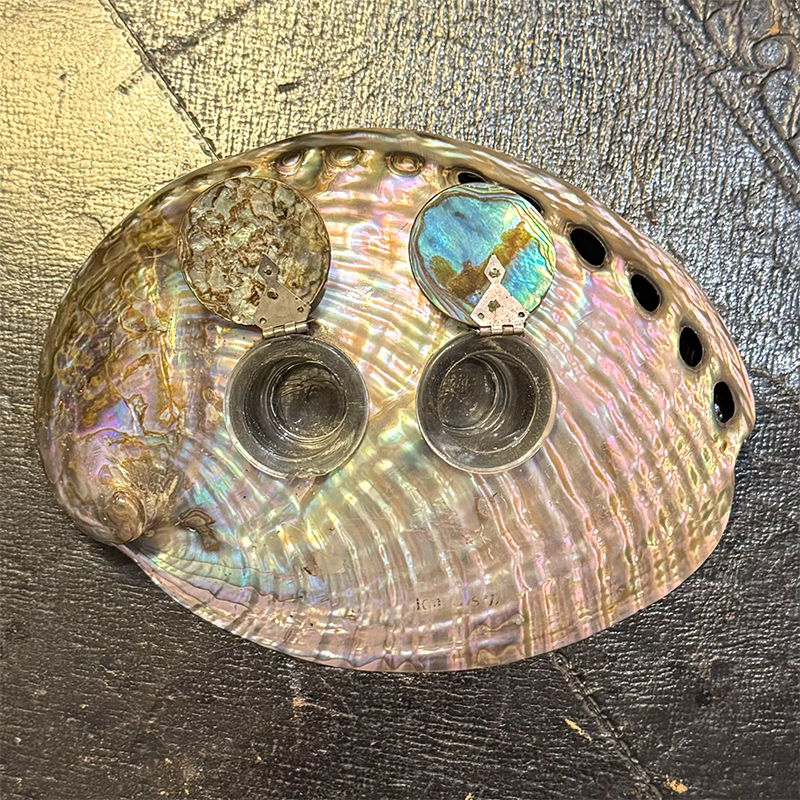
The inkstand features a large, naturally formed abalone shell, prized for its luminous, iridescent surface. Across the curved form, soft tones of pearl, rose, and green shimmer under changing light. Along the upper rim, a series of evenly spaced apertures provide placement for dip pens or quills.
At the center, two circular lidded compartments sit symmetrically, each framed in metal and hinged for access. These compartments likely held ink, sand, or small writing accessories. Additionally, the shell’s interior provides a shallow tray, suitable for organizing tools or catching ink drips. Overall, the composition balances function with a sculptural, organic presence.
Artisans selected natural abalone shell for its durability and visual complexity. They then adapted the form with carefully drilled openings and applied metal fittings. Consequently, the object reflects both handcraft and practical ingenuity.
Importantly, each shell displays unique tonal shifts, ensuring that no two examples appear identical.
Scholars attribute this form to English coastal souvenir production, where artisans utilized locally sourced shells. During the Victorian and Edwardian eras, seaside resorts fostered a thriving market for such decorative objects. Therefore, this inkstand reflects both regional identity and the period’s fascination with natural materials.
The inkstand presents in very good antique condition, with minor wear consistent with age and use. The metal fittings remain intact, and the hinged lids function properly. Moreover, the shell retains its strong iridescence and structural integrity.
Collectors value shell inkstands for their intersection of natural form and historical utility. In particular, this example stands out for its scale, symmetry, and preservation. Furthermore, it offers insight into a period when writing objects carried both functional and decorative importance.
This piece enhances both traditional and contemporary interiors. For example, it serves as a focal point on a writing desk or curated shelf. Additionally, it pairs well with other antique writing instruments and coastal decorative objects.