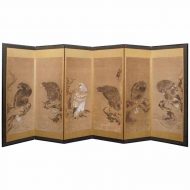
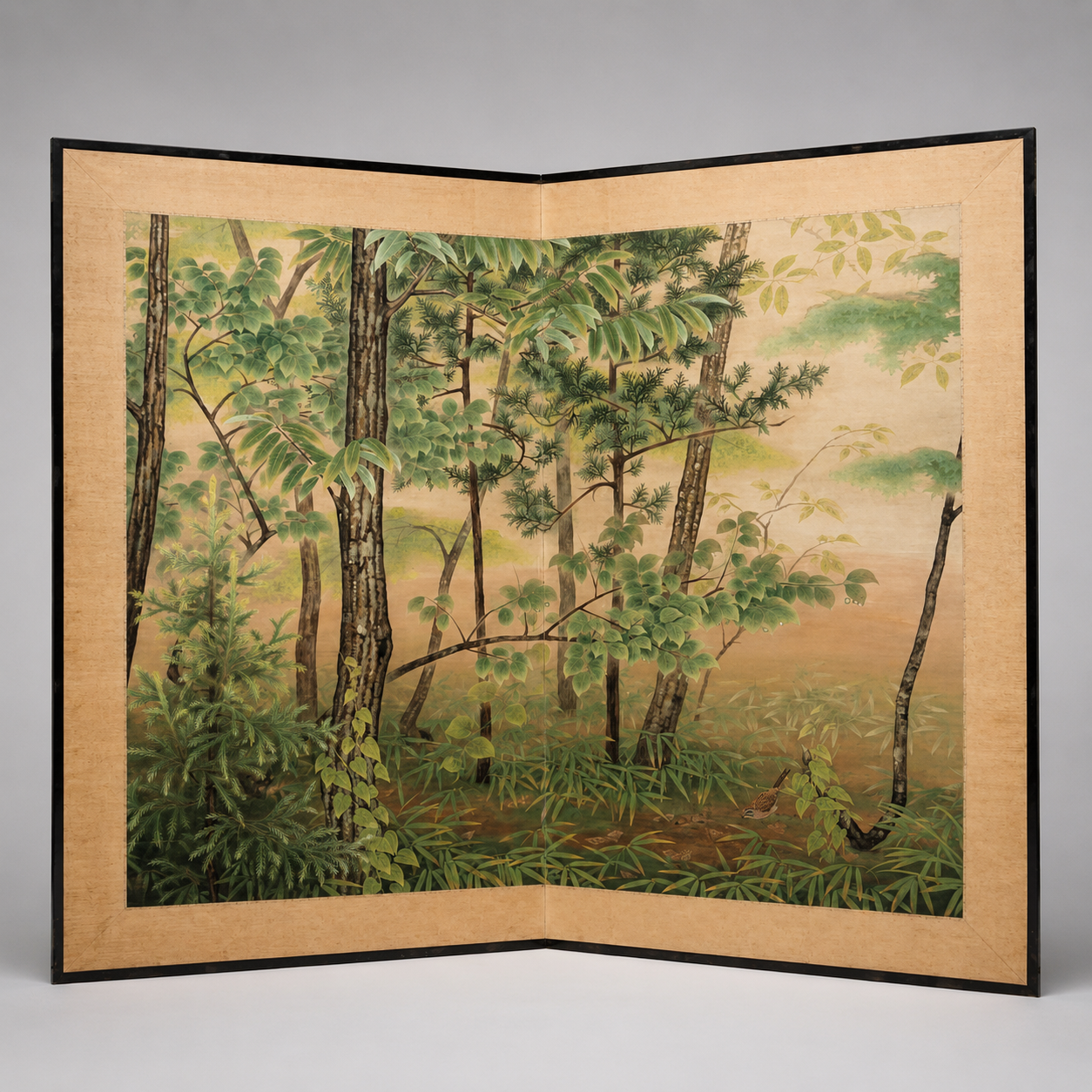
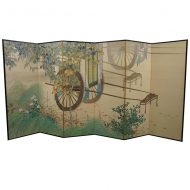
Japanese Taishō Silver Six-Panel Screen.
Country / Year: Japanese, 1912 – 1926
Condition: Good
Measurements: H: 69″ / W: 24″ each panel – 144″ fully extended / D: 1.25″

$4,500.00

$4,500.00
Japanese Taishō Silver Six-Panel Screen.
Country / Year: Japanese, 1912 – 1926
Condition: Good
Measurements: H: 69″ / W: 24″ each panel – 144″ fully extended / D: 1.25″
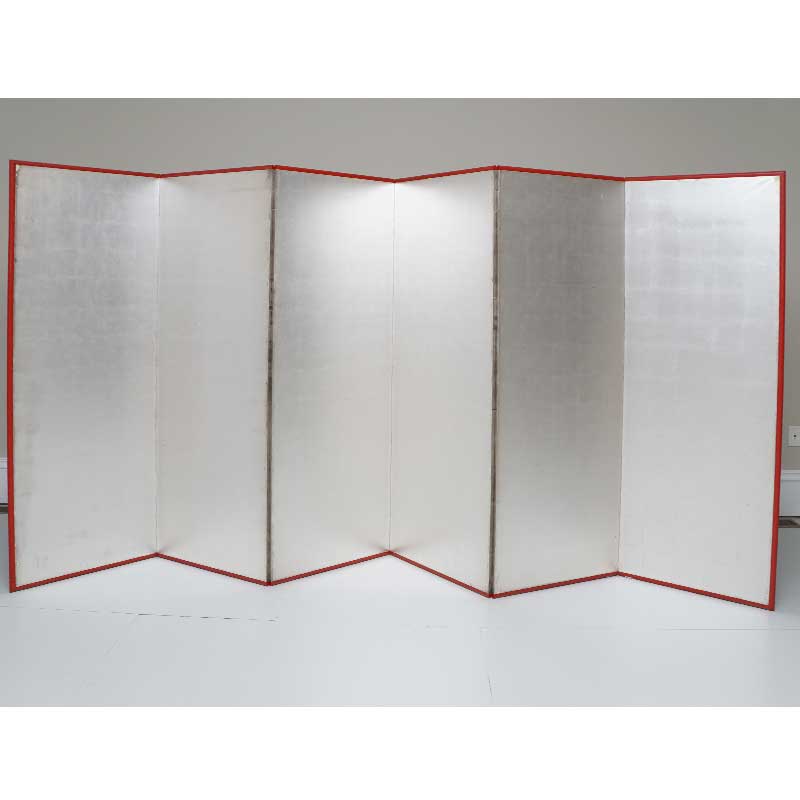
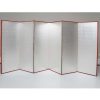
This Japanese silver six-panel screen offers a refined and atmospheric presence. Dating to the Taishō period, 1912–1926, it brings quiet elegance to a room without overwhelming it.
Each panel measures 69 inches high by 24 inches wide. Fully extended, the screen reaches 144 inches across. This generous width gives the piece strong architectural presence. It can define a wall, soften a room, or create a luminous backdrop.
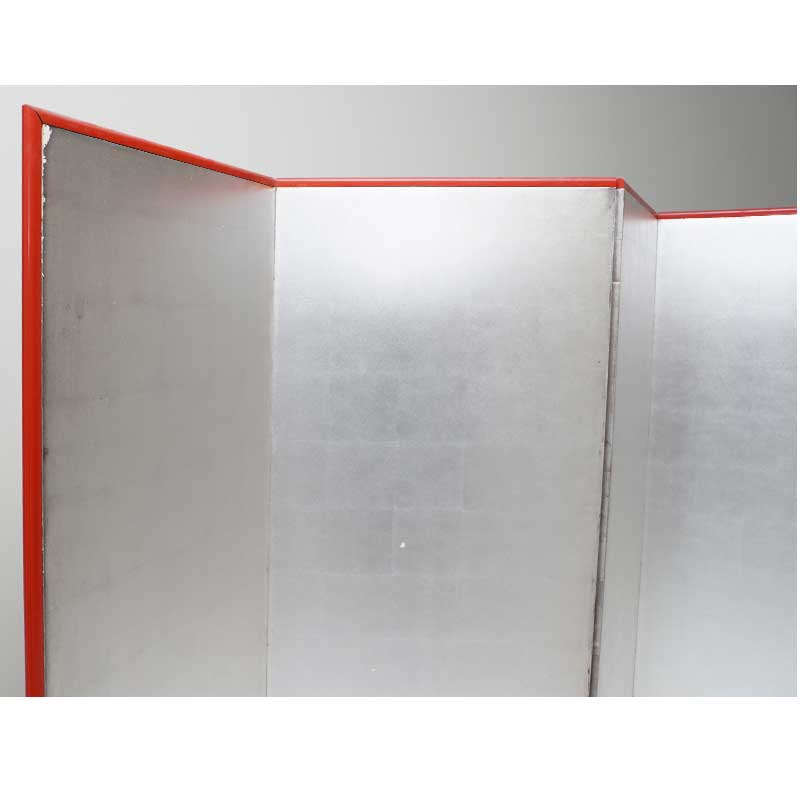
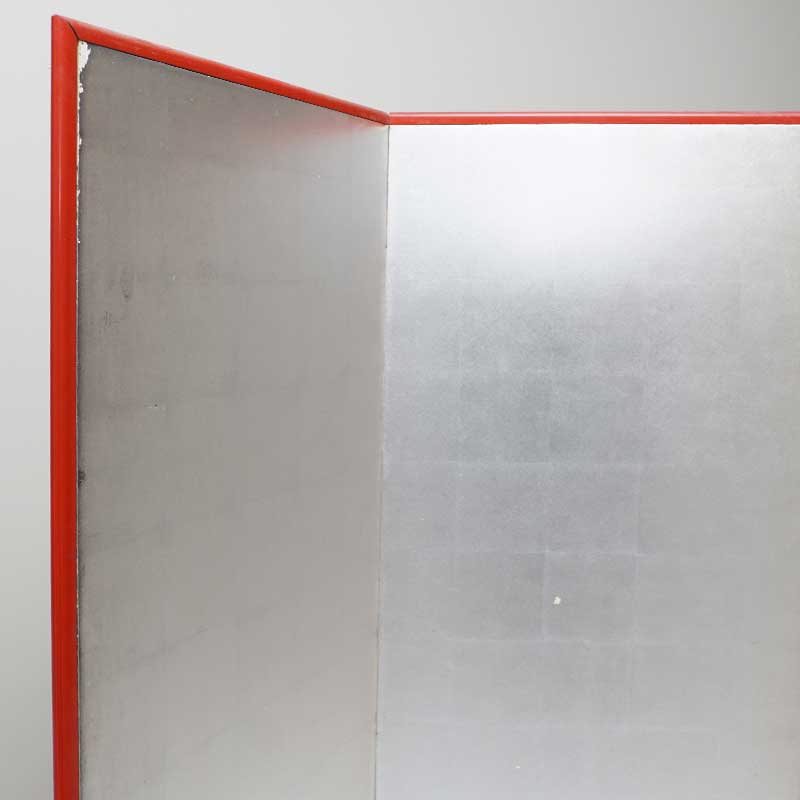
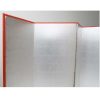
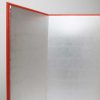
The silver-toned surface gives the screen a subtle reflective quality. It catches changing light throughout the day. In softer evening light, it can appear quieter and more atmospheric. In brighter interiors, it brings a restrained sense of glamour.
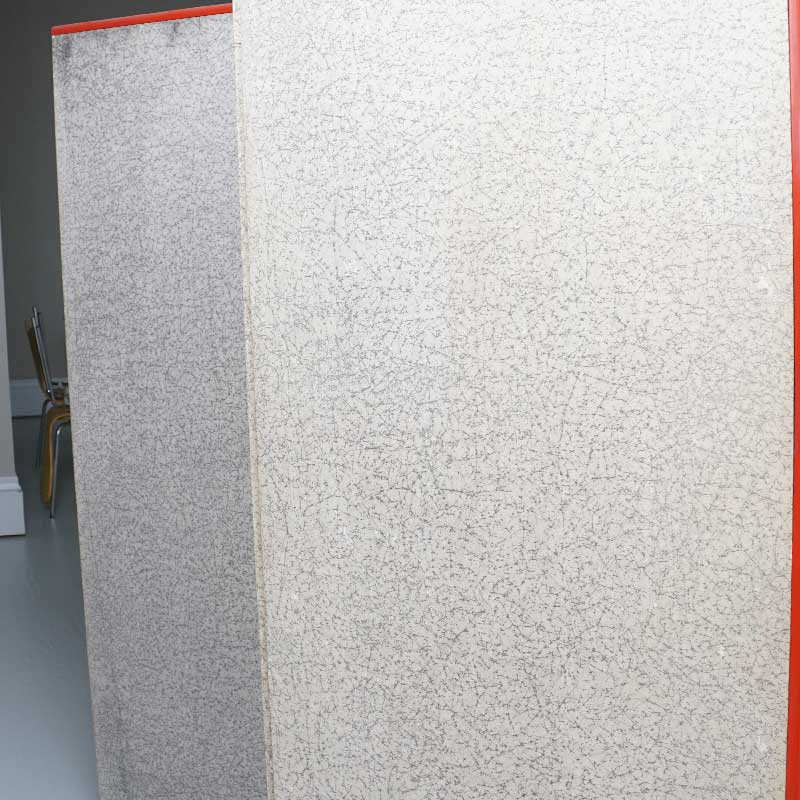
The condition is noted as good. As with many Japanese folding screens, the appeal lies in both form and surface. The six-panel format allows it to stand with graceful movement rather than rigid flatness.
Japanese folding screens, or byōbu, have long served both practical and decorative purposes. They were used to divide interiors, create privacy, and provide visual focus within a room. The Metropolitan Museum of Art notes that folding screens helped shape and define interior spaces in Japanese settings.
This example belongs to the Taishō period, a short but culturally rich era in Japan. The period is often associated with changing tastes, increased international exchange, and a refined decorative sensibility.
The silver surface gives this screen a quieter character than heavily painted or gold-ground examples. Its strength is not narrative detail. Its strength is atmosphere, scale, and surface.
A collector of Asian Art may appreciate this screen for its period, format, and decorative restraint. The six-panel construction is especially desirable for display. It allows the object to occupy a room with rhythm and movement.
The silver surface adds a distinctive visual vocabulary. It suggests refinement without excess. It also gives the screen flexibility across different interiors and collections.
Collectors of Japanese decorative arts may be drawn to its Taishō period date. The screen offers a bridge between traditional Japanese form and a more modern decorative sensibility.
For an interior designer, this screen offers scale, texture, and light. It could be placed behind a sofa, above a low console, or along a dining room wall. It could also serve as a backdrop in a bedroom or gallery-like entry.
The silver tone works beautifully with pale upholstery, dark woods, lacquer, bronze, parchment, and plaster walls. It can pair with both traditional and contemporary interiors.
In a modern room, it adds depth and history. In a layered antique setting, it introduces calm and luminosity. Its large scale makes it especially useful where a wall needs presence.
Place this screen behind a long console with ceramics, bronzes, or sculptural objects. It would also work behind a pair of chairs or a low Japanese table.
In a bedroom, it could create a quiet focal point behind a bed. In a living room, it could soften a large wall without adding visual heaviness.
The screen should be lit carefully. Soft, indirect lighting will help bring out the reflective surface without glare.
This screen stands out for its combination of scale, restraint, and surface. It has presence without being loud. It feels decorative, architectural, and quietly luxurious.
Its silver tone gives it unusual versatility. It can support a serene interior or add contrast to a richly layered room.
For collectors, designers, and buyers seeking Japanese decorative art with strong interior appeal, this Taishō period screen offers a beautiful and adaptable choice.