Chinese Export Lacquer Sewing Box
Country / Year: China, 19th century
Condition: Very Good
Measurements: H: 5.5″ / W: 14″ / D: 10″

$800.00
$800.00
Chinese Export Lacquer Sewing Box
Country / Year: China, 19th century
Condition: Very Good
Measurements: H: 5.5″ / W: 14″ / D: 10″

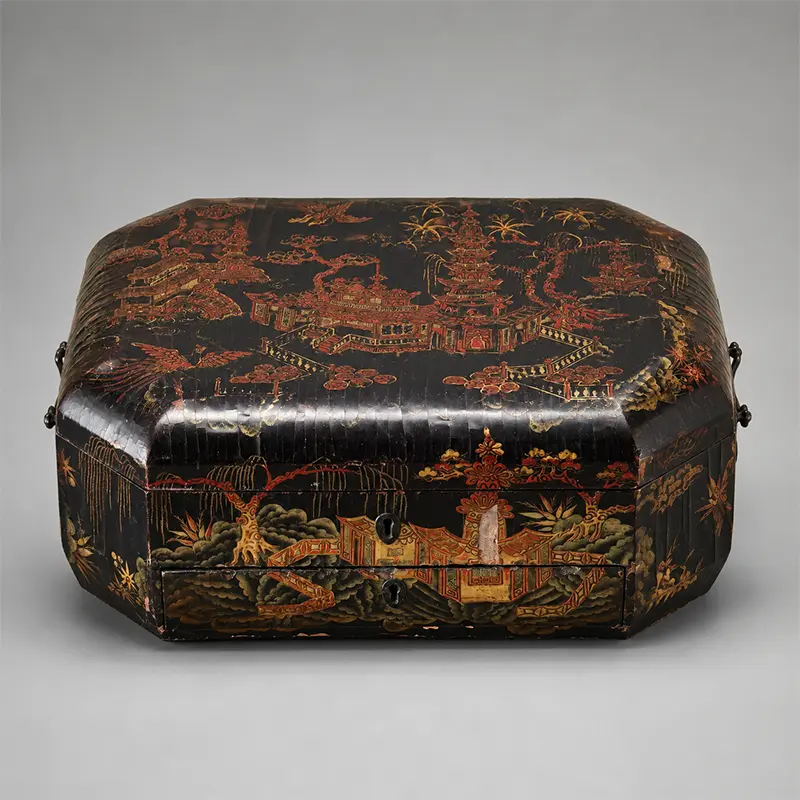
Elegant, useful, and richly decorated, this Chinese Export lacquer sewing box reflects the Western fascination with China during the nineteenth century.
Artisans created the box in Canton, now Guangzhou, for the Western export market. Its design combines traditional Chinese lacquer work with the form of an English sewing or work box.
Today, it remains both a decorative object and an important survivor of the international luxury trade.
By the early nineteenth century, Canton had become a major center of China’s export trade.
Local workshops produced lacquer furniture, tea caddies, writing boxes, and sewing boxes for British and American buyers. Artisans adapted familiar Western forms and covered them with Chinese-inspired decoration.
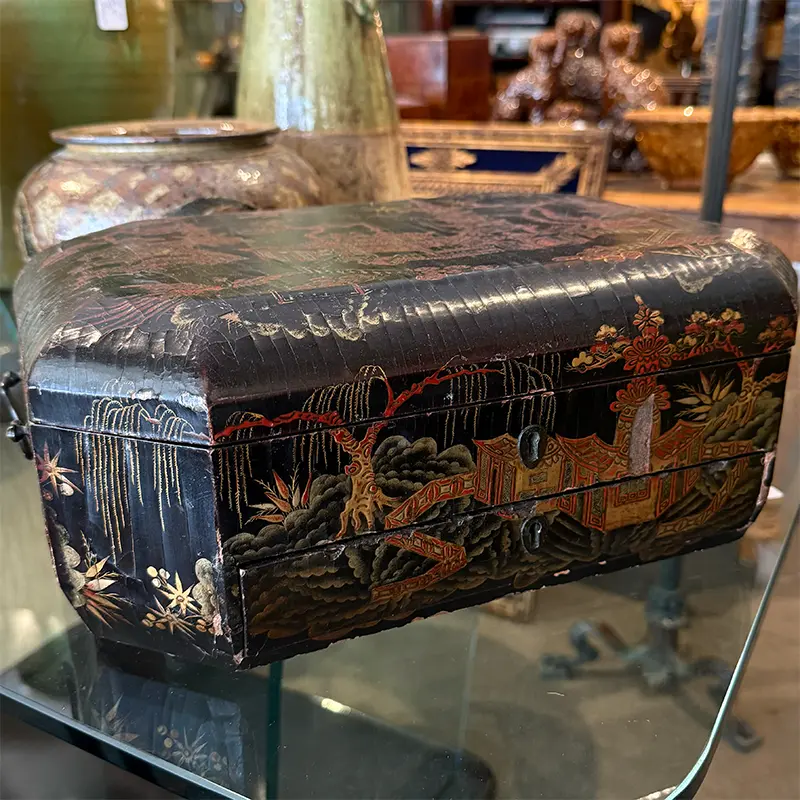
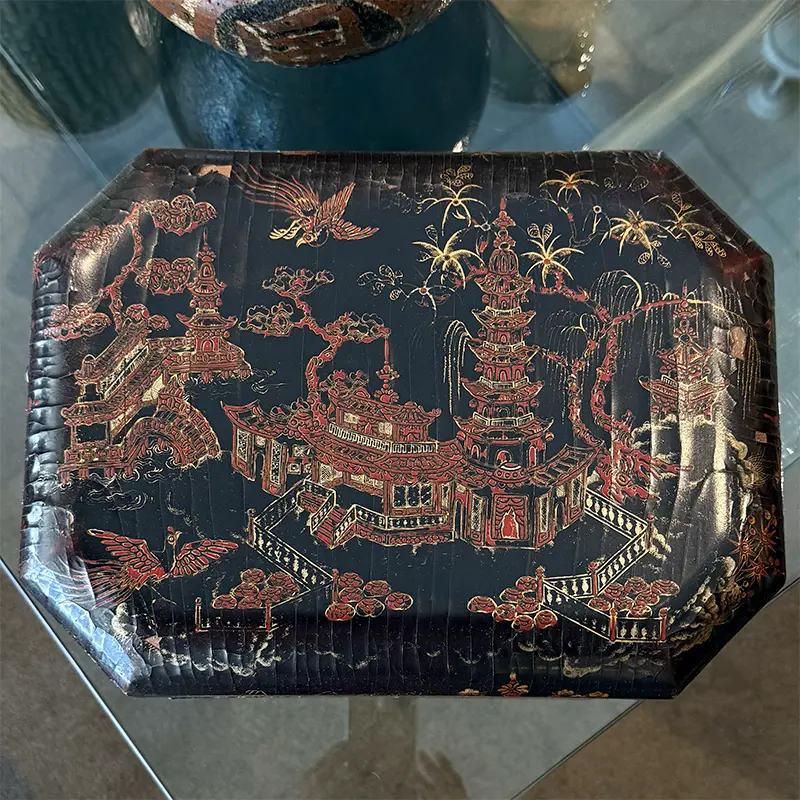
This box has a gently domed lid and chamfered corners. Its elegant shape reflects the refined taste of the mid-nineteenth century.
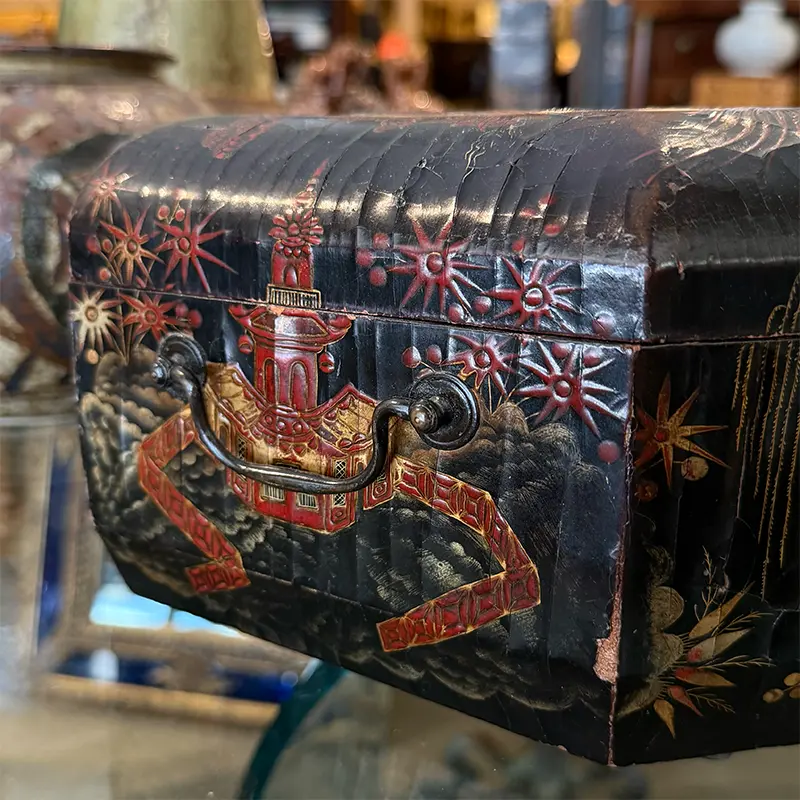
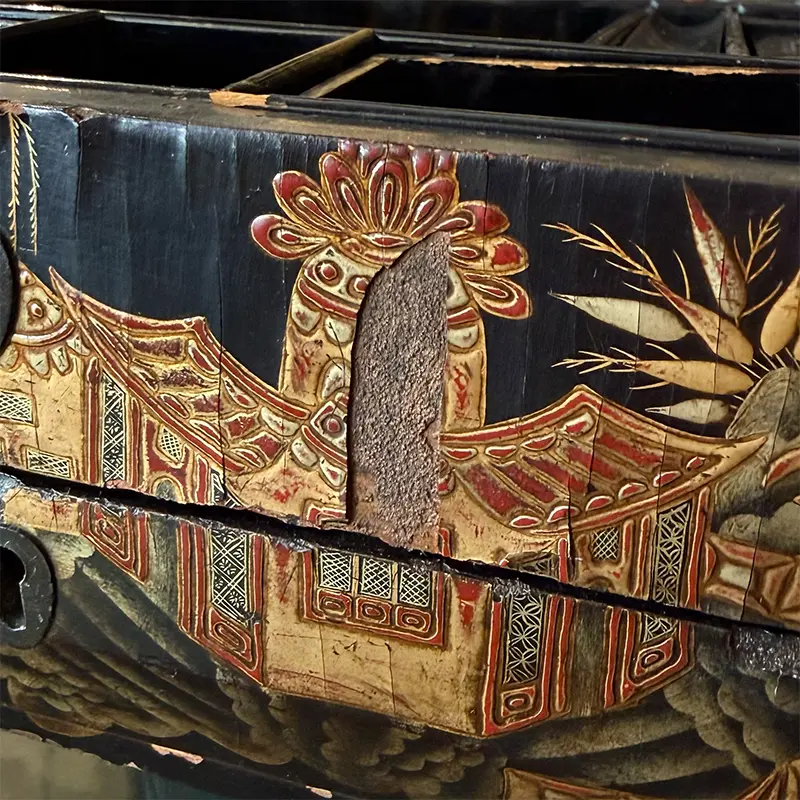
Hand-painted scenes cover nearly every surface. Pavilions, bridges, flowering trees, birds, and garden landscapes appear in gold and color. The decoration stands out against the deep black lacquer ground.
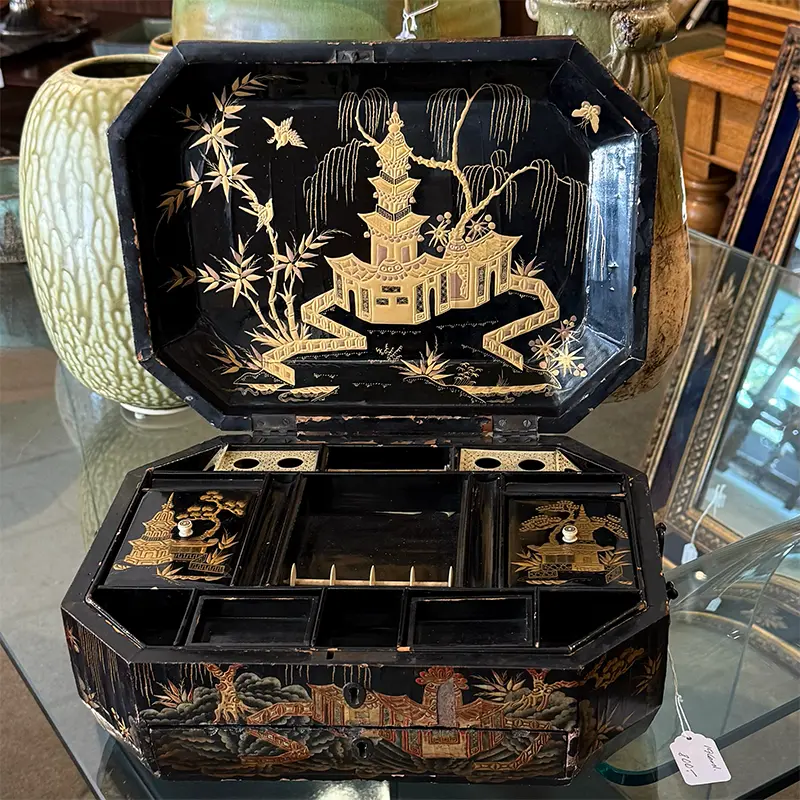
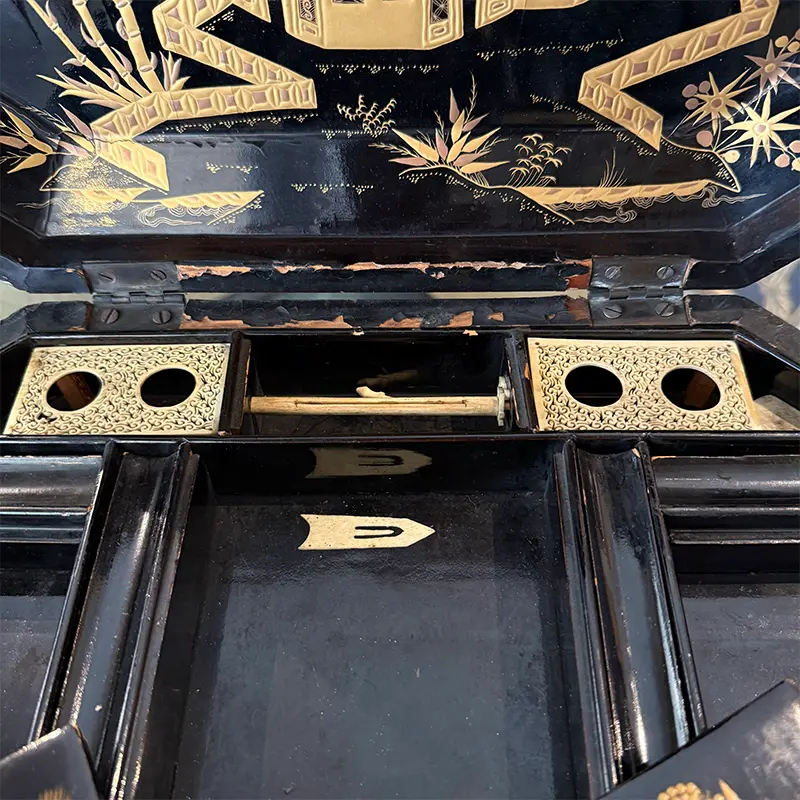
The fitted interior gives this sewing box much of its appeal.
Many surviving examples have lost their original fittings. This box retains much of its original layout and organization.
The interior includes removable compartment lids, divided trays, and a central spool holder. It also contains finely pierced ivory thread holders made to support sewing reels.
These elements show how carefully artisans designed the box. It was decorative, but it also served a practical purpose.
Its completeness makes it especially appealing to collectors.
Artisans constructed the box from hardwood. They then applied several layers of black lacquer.
Each layer required careful polishing before the painted decoration could begin.
Gold and colored details create depth across the surface. Small buildings, trees, birds, and garden scenes bring movement to the design.
The painted decoration also reflects the popularity of chinoiserie in Western interiors.
Artisans completed each element by hand. As a result, small variations remain visible throughout the design. These differences reveal the work of the individual maker.
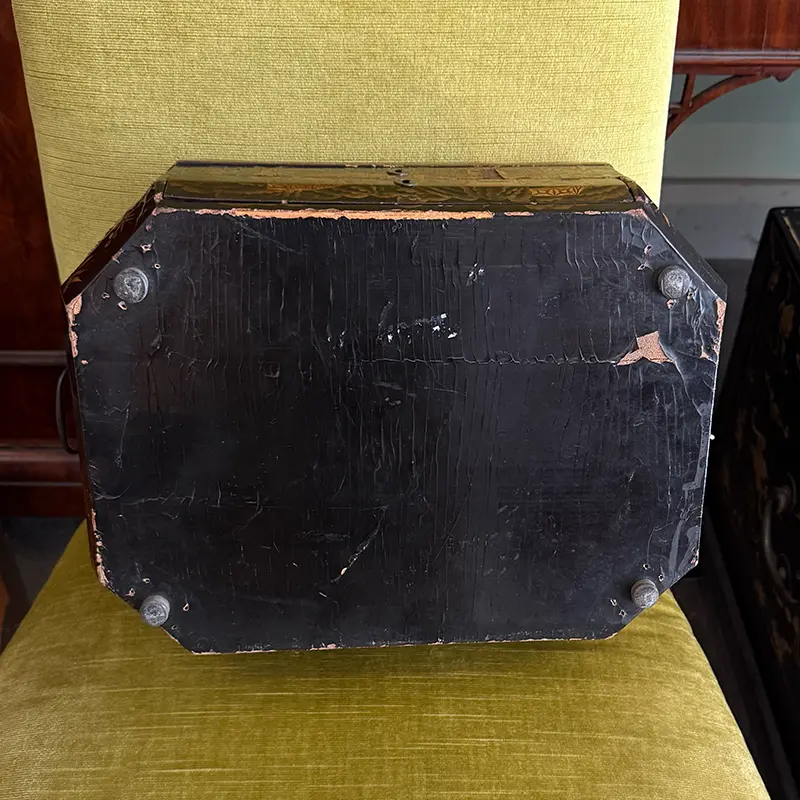
The box shows wear consistent with its age and long history of use.
Shrinkage cracks appear within the lacquer. There are also scattered edge losses, surface rubbing, and small areas of lacquer loss.
These changes developed as the wooden structure moved over time.
The original hardware, feet, fitted interior, and decorative scheme remain present. Together, they preserve the character and authenticity of the piece.
The signs of age do not diminish its appeal. Instead, they add historical depth and show that the box was used, valued, and preserved across generations.
Collectors, designers, and historians continue to value Chinese Export lacquer.
During the nineteenth century, a sewing box represented refinement, skill, and domestic accomplishment. It was both a useful object and a symbol of taste.
Today, this example could sit on a coffee table, library desk, or dressing table. Its sculptural form and detailed surface give it strong decorative presence.
The richly painted exterior, fitted interior, and authentic wear make this a notable example of Cantonese export lacquer.
It offers a tangible link to the exchange of art, craftsmanship, and commerce between China and the West.
Above all, it recalls an era when makers transformed practical household objects into works of lasting beauty.