
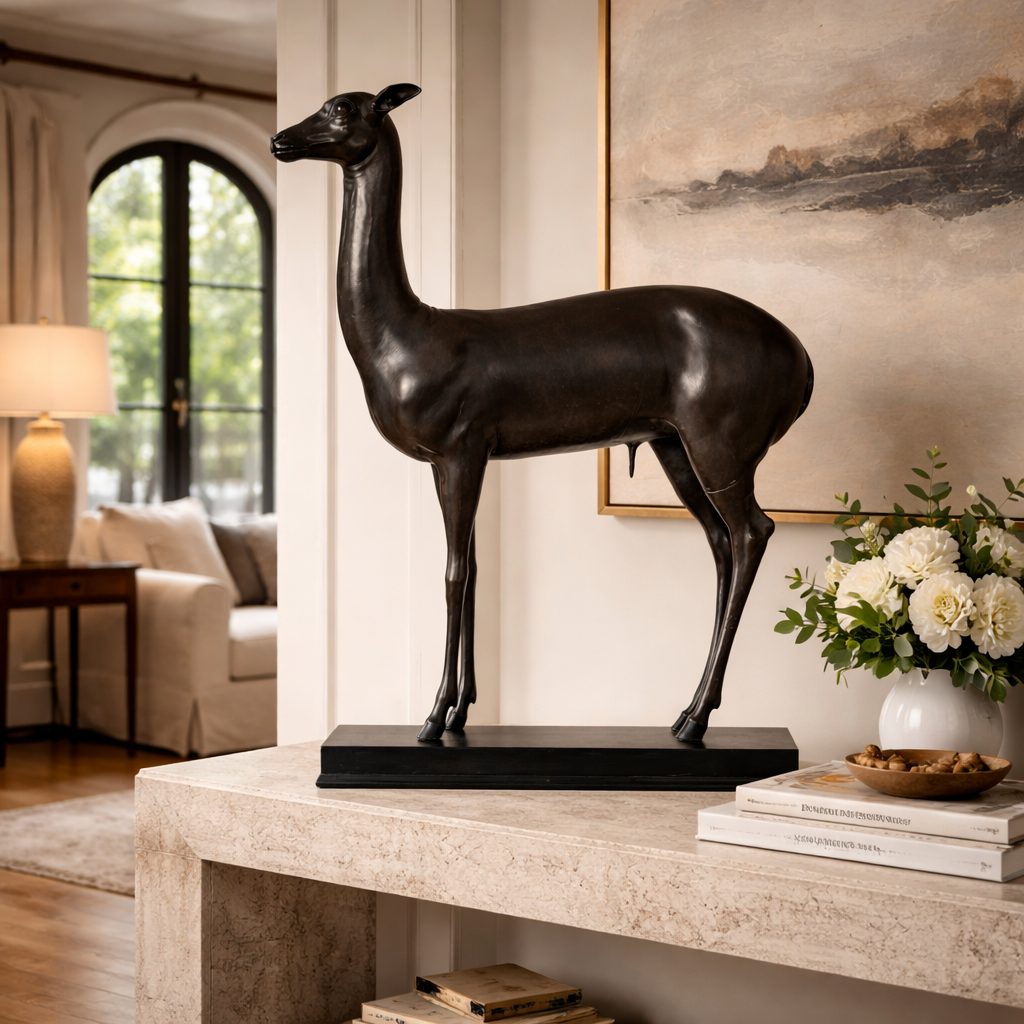
In Bronze: Objects That Refuse to Fade
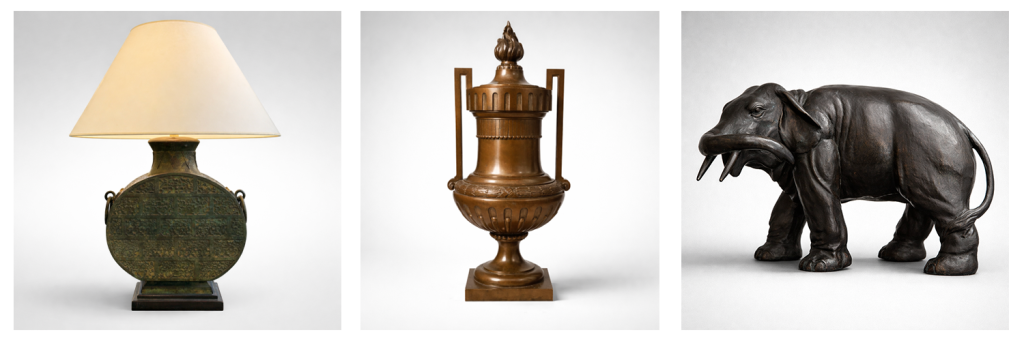
There is a certain weight to bronze that goes beyond the physical.
Rather, it carries the weight of permanence—of memory, of intention, of something made not simply to exist, but to endure.
Unlike wood, which softens, or textiles, which inevitably fade, bronze holds its ground. Over time, it does not diminish; instead, it deepens. Its surface evolves, developing a patina shaped by decades—sometimes centuries—of touch, air, and quiet presence.
As a result, to live with bronze is to live with objects that have already lived before you.
The Human Story in Metal
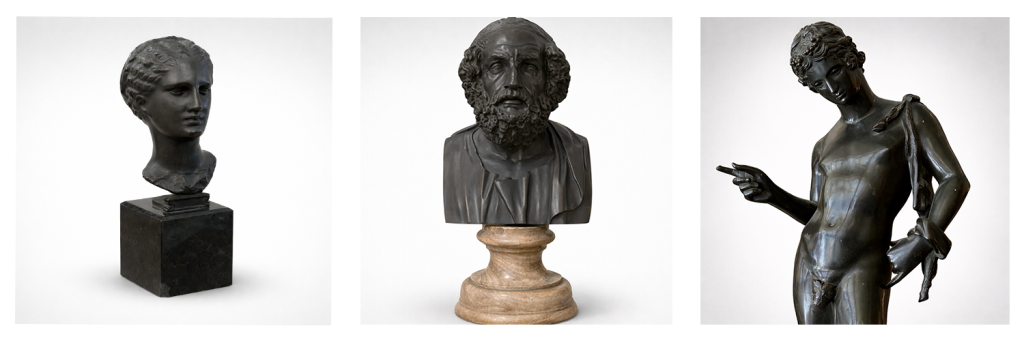
In European works, bronze often turns toward the human form.
Here, a face, a gesture, or a body in motion is not merely captured—it is refined, idealized, and ultimately preserved. In this way, these works echo a long classical tradition, where artists sought permanence through form.
Moreover, these pieces bring a quiet gravity into a space.
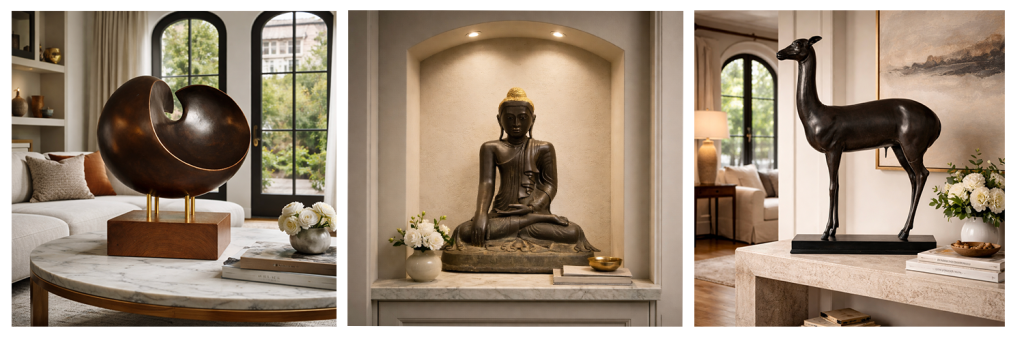
Whether placed on a console, a pedestal, or even within a more minimal setting, a single figure has the ability to anchor a room. Not loudly, but unmistakably.
Objects of Stillness: The Japanese Approach
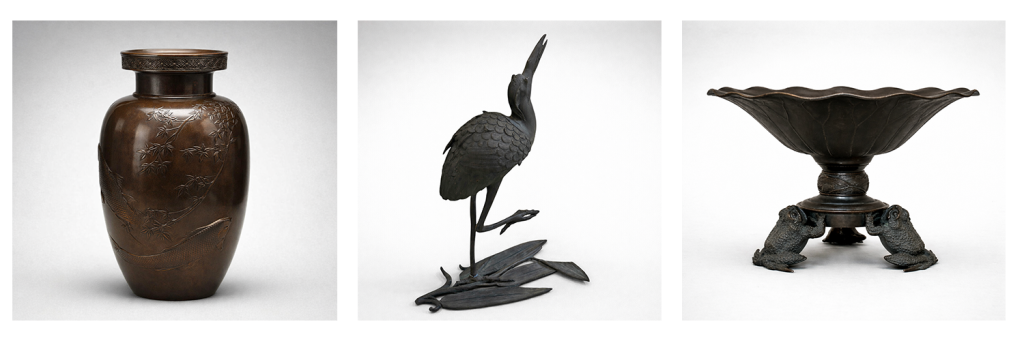
In contrast, Japanese bronze speaks in a different language.
Rather than focusing on the human form, the emphasis shifts toward the elemental:
- A bamboo motif, quietly etched into a vessel
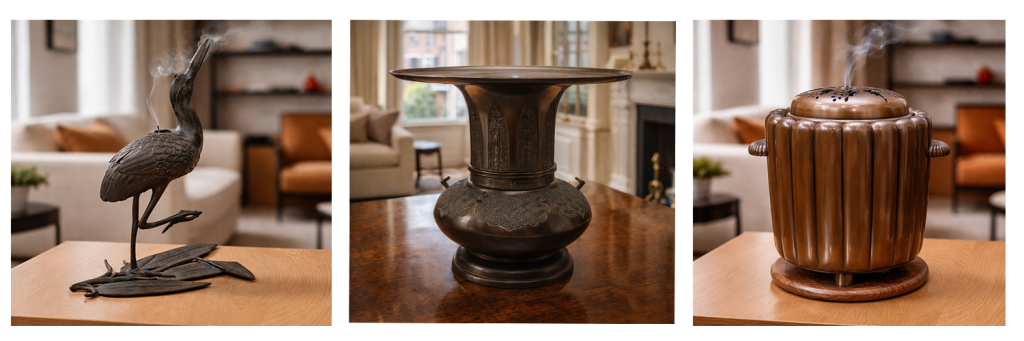
- Duckbill poise gracefully on one leg, both sculpture and incense burner
- Frogs supporting a lotus, a quiet meeting of pond and ritual, earth and offering
Consequently, these are objects of restraint—of stillness.
They do not demand attention—they reward it.
Where European bronze often tells a story, Japanese bronze invites contemplation.
Patina: The Signature of Time
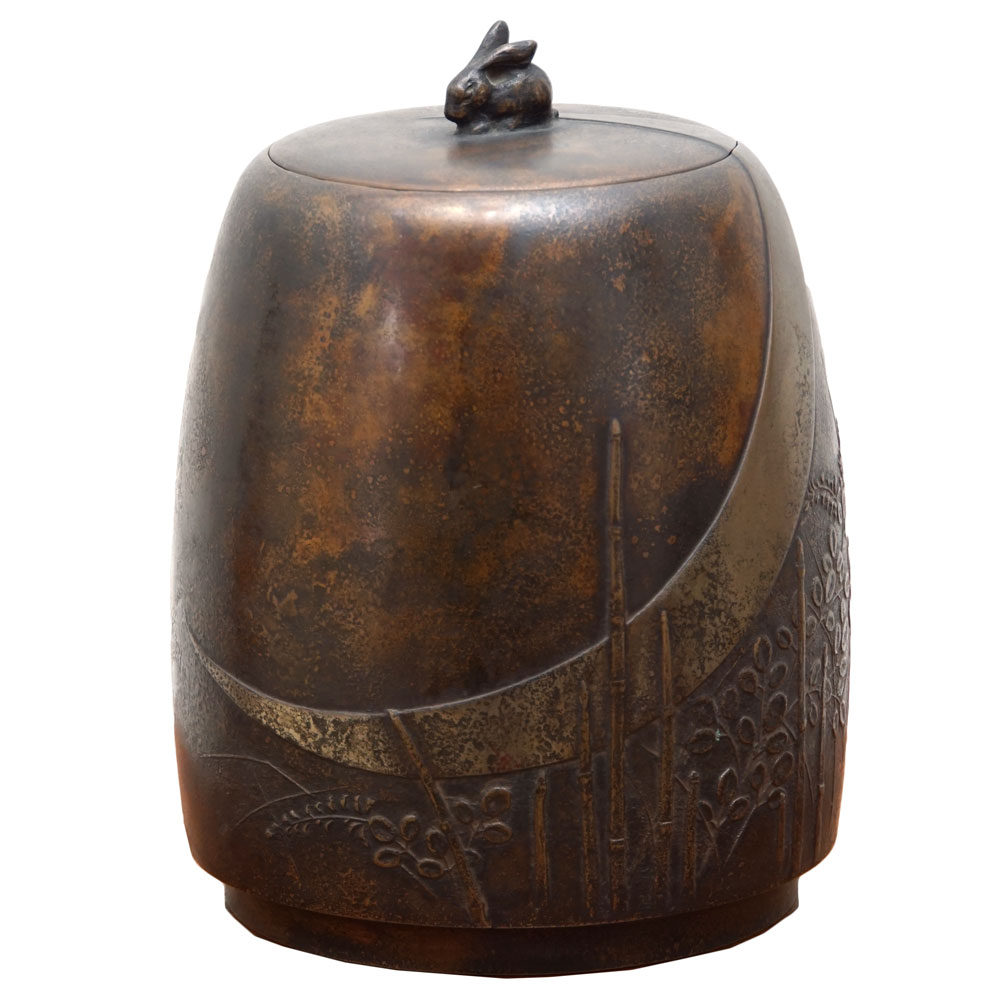
Equally important is the surface itself.
A burnished umber. A smoked bronze depth. Flecks of embered gold beneath the surface.
This is not a flat finish—it breathes.
The surface carries a quiet complexity, where darkness pools in the recesses and warmth rises through the high points. Subtle variations move across it like weathered earth after rain—rich, layered, and impossibly nuanced.
You can feel the passage of time in it.
Not as wear, but as presence.
The patina gathers in the carved details, softening their edges, giving the form a sense of memory rather than manufacture. Light doesn’t sit on top of it—it slips into it, revealing hidden tones that shift depending on how you approach it.
There is a quiet glow here—not bright, not polished—but alive in a way that feels earned.
And like all true bronze, this surface is singular.
It is not just finished.
It is formed by time.
From Utility to Presence
Historically, many of these forms began with a clear purpose.
Vessels held water. Burners carried incense. Urns marked ritual and memory.
Over time, however, their function evolved.
Today, they exist in a different role—not as tools, but as anchors of atmosphere.
Even so, their sense of purpose remains. A bronze vessel placed on a table does not need to hold anything to feel complete.
Instead, it holds something less visible—history, weight, and intention.
Why Bronze Still Matters
In a world of fast materials and temporary objects, bronze offers something rare:
Finality.
Above all, it offers finality.
It does not feel disposable, nor does it feel seasonal. On the contrary, it resists trend altogether.
As a result, it becomes part of a space in a way few materials can—quietly elevating everything around it.
Even a small piece carries weight. Likewise, even a single object can shift the tone of a room.
A Considered Collection
Taken together, these pieces span cultures, forms, and intentions—European and Japanese, sculptural and functional.
However, what unites them is not origin, but permanence.
They were made to last.
And now, in turn, they wait for the next space to inhabit.
For those drawn to objects with presence, history, and quiet authority, bronze remains one of the most enduring materials to live with—and, importantly, to collect.