
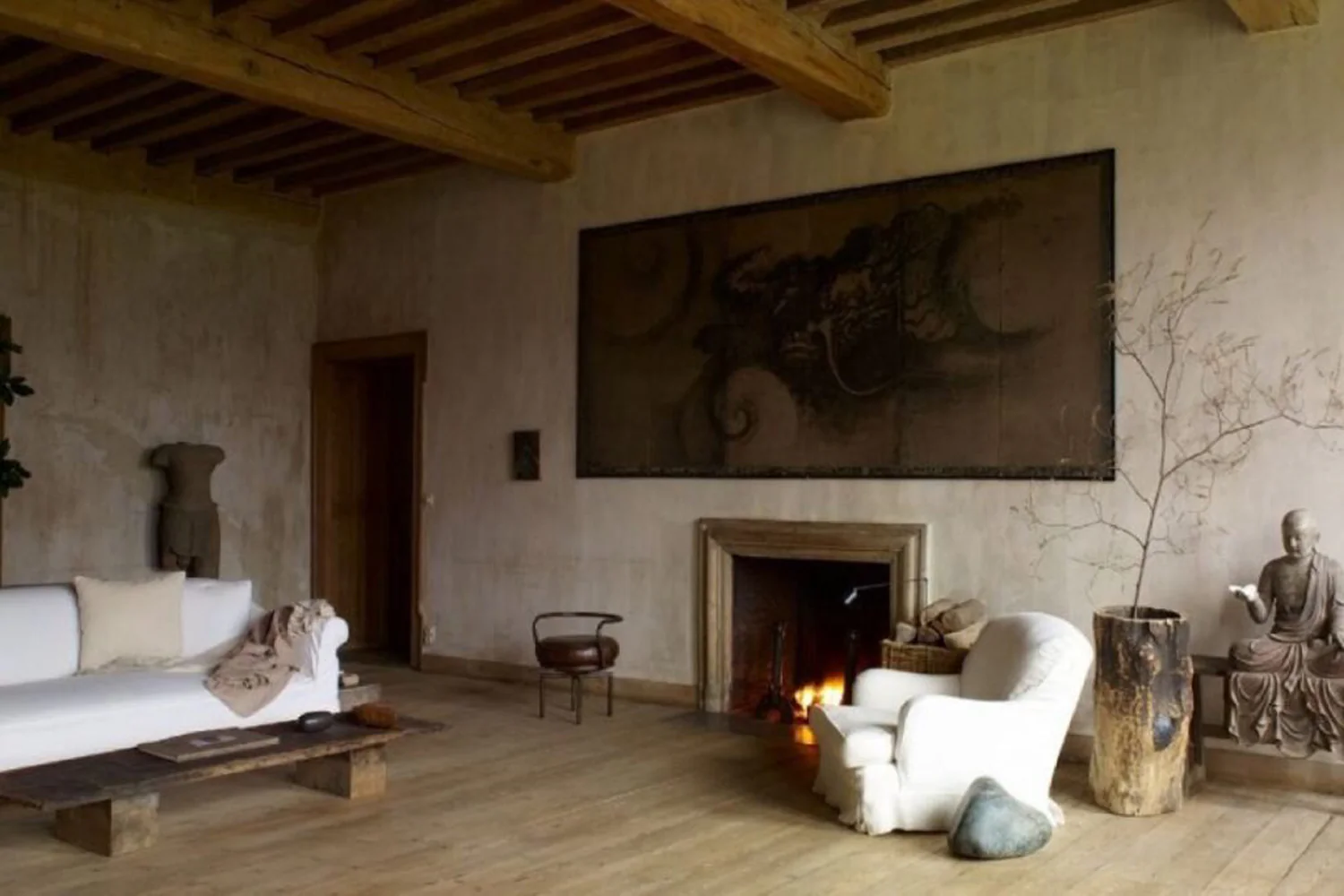
Interior Designers: So…when did this become a thing?
A short history of how design moved from power to profession to participation.
People often think interior design is a modern invention. Something that showed up once people started caring about trends or paint colors. But the instinct behind interior design is much older than the profession itself.
It actually starts with power.
It begins in Ancient Rome.
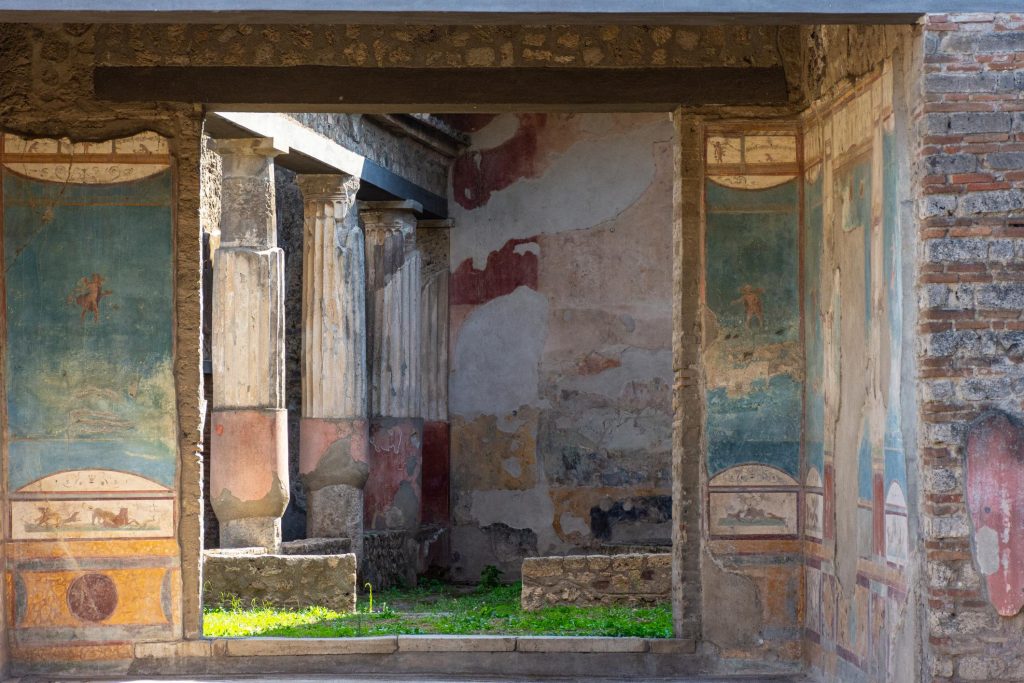
Interior of an ancient Roman house with preserved wall frescoes and columns at the archaeological site of Pompeii, Italy
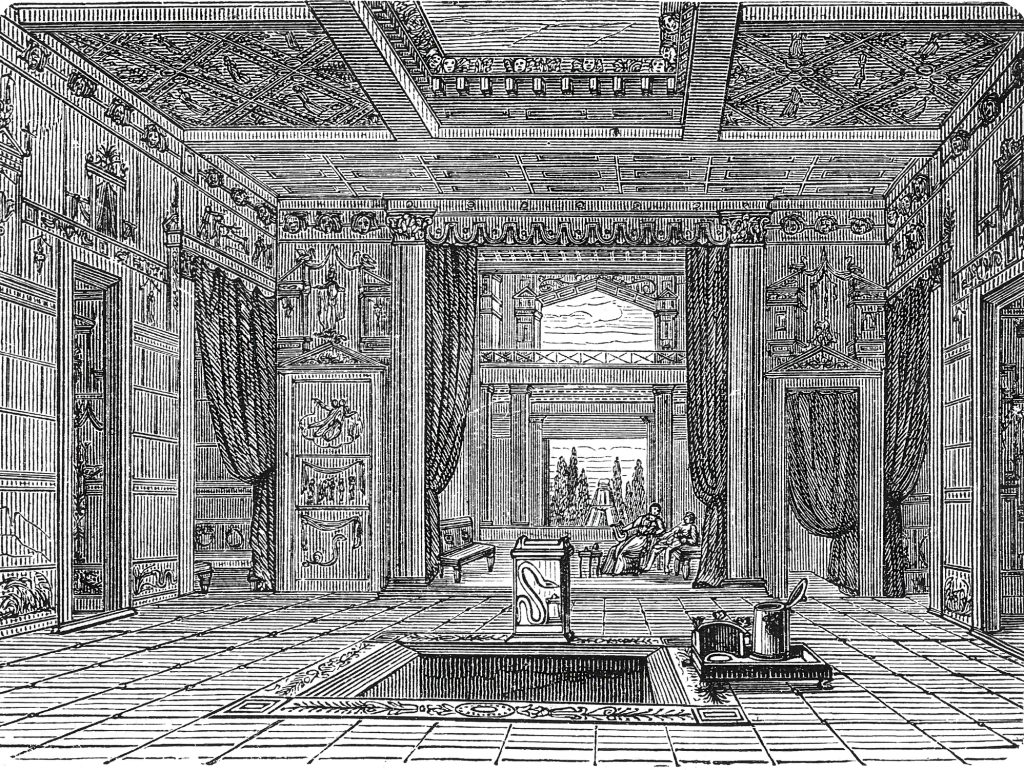
The atrium and tablinum of a Pompeian house, showcasing detailed Roman architecture, ornate ceiling, lavish furnishings, and draped curtains, illustrating domestic elegance and historical splendor, old vintage illustration, 1880

Italy – Archeology – Atrium Dome
In Ancient Rome, wealthy homeowners were already thinking carefully about how their interiors worked. Not just structurally, but socially. Who entered where. What they saw first. Where they were invited to sit. Which rooms were meant to impress and which were private.
The Roman domus wasn’t casual. The atrium, especially, was doing a lot of work. It was where guests were received, business was conducted, and status was quietly—but very clearly—communicated.
We know this because Roman writers actually talked about it. Vitruvius, writing in the first century BCE, described how rooms should be proportioned, oriented, and used inside the home. He treated interiors as intentional environments, not decoration layered on afterward.
And then there’s Domus Aurea, built for Emperor Nero. Its interiors were designed to overwhelm—gold surfaces, painted illusions, controlled light. This wasn’t about comfort. It was about experience.
No one called themselves an interior designer yet, but people were absolutely being commissioned to shape how interiors looked and felt.
And in that sense, not much has changed.
In the 21st century, we still use our homes to flex—just in subtler ways. The approach to the house, the driveway, the entry, where guests are invited to sit. Certain rooms are still designed to impress, while others remain private. Design continues to do what it always has: communicate status, often quietly, and sometimes so quietly you barely notice it happening.
For a long time, this was only for the wealthy.
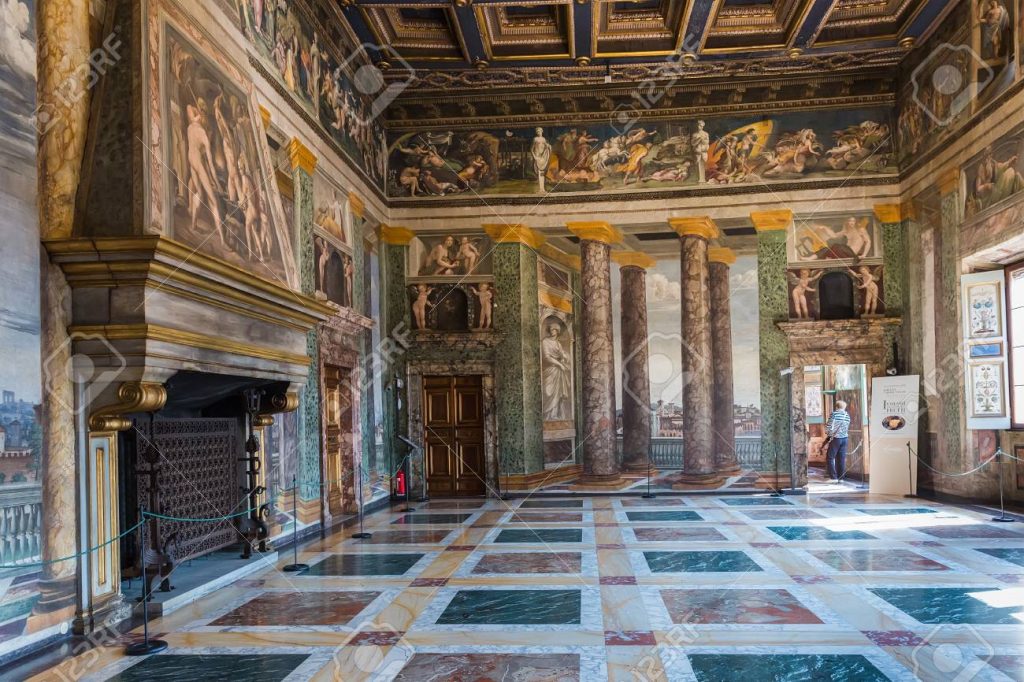
Rome, Italy – March 27, 2018: Interior of Renaissance Villa Farnesina, a monument of architecture and painting of the High Renaissance
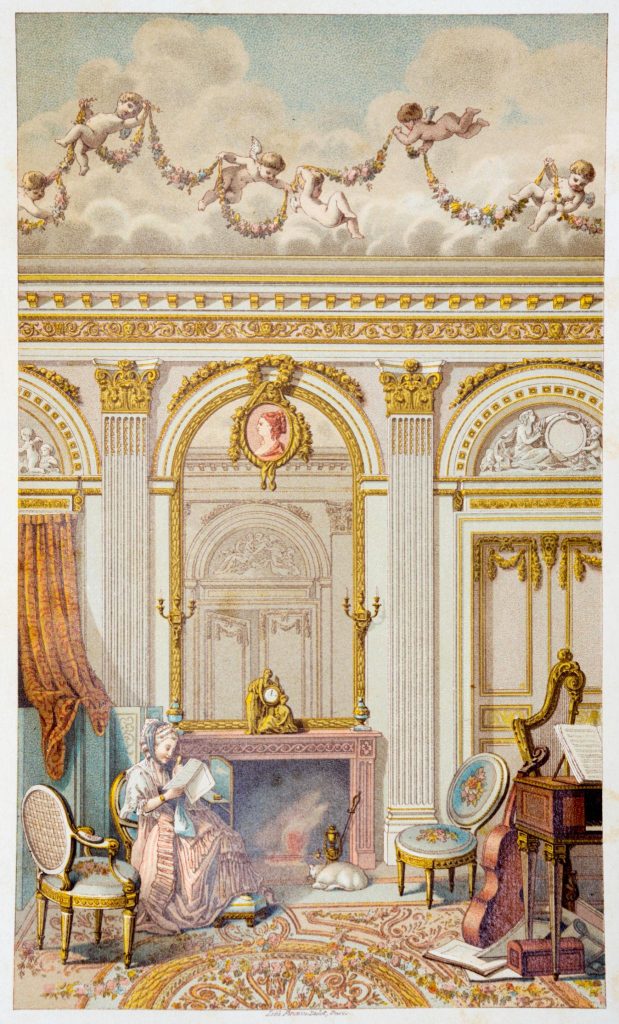
Eighteenth-Century French Palace Interior
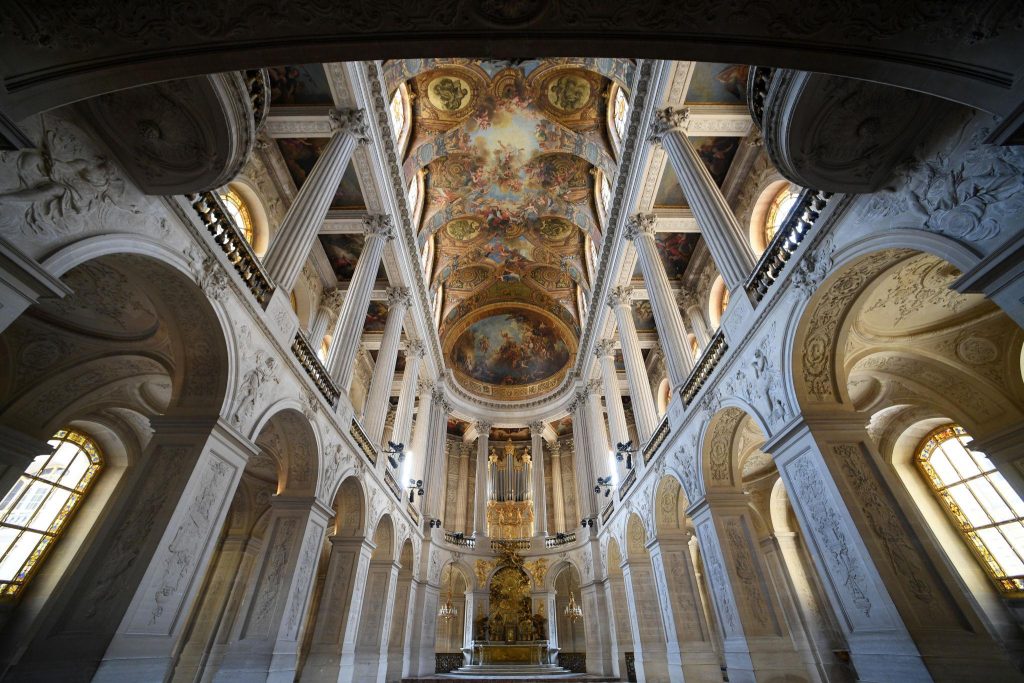
Palace Of Versailles
After Rome, this kind of intentional interior design never really disappeared—it just stayed firmly in elite spaces.
During the Renaissance and well into the 18th century, wealthy families across Europe commissioned architects, artists, and craftspeople to design entire interiors. Walls, ceilings, furniture, textiles—everything was considered together. Homes weren’t just built; they were orchestrated.
French salons are a good example. These rooms were designed around conversation and social life. Furniture placement mattered. Proportions mattered. Even softness and comfort became part of the design conversation.
But this level of attention came with a price tag. Interior design wasn’t something you hired someone for unless you already had money and status. For everyone else, interiors were practical, inherited, or improvised.
That’s why what happens next is such a shift.
Someone finally names the job.
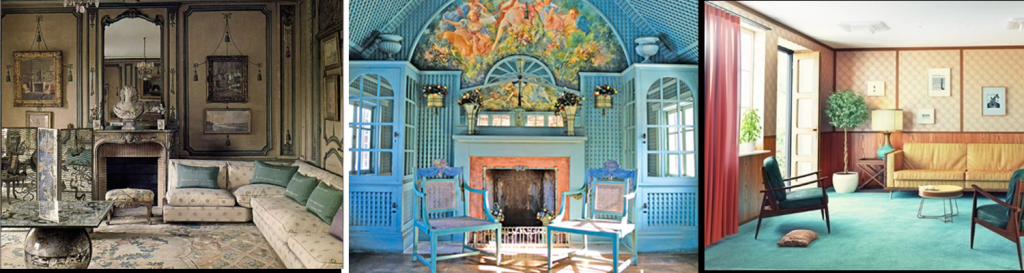
Elsie De Wolfe
In the early 1900s, Elsie de Wolfe did something surprisingly bold. She didn’t invent interior design—but she gave it a title and started invoicing clients.
She called herself an interior decorator.
De Wolfe worked primarily for wealthy clients, but her approach was different. She favored lighter rooms, comfort, and livability over heavy Victorian interiors. More importantly, she worked independently, charged professional fees, and publicly took credit for her work.
That matters. Once something is named, it can be practiced, taught, and hired for. Interior design started to exist as its own thing, separate from architecture or upholstery or fine art.
Still, it was mostly a service for the wealthy. That wouldn’t change until the mid-20th century.
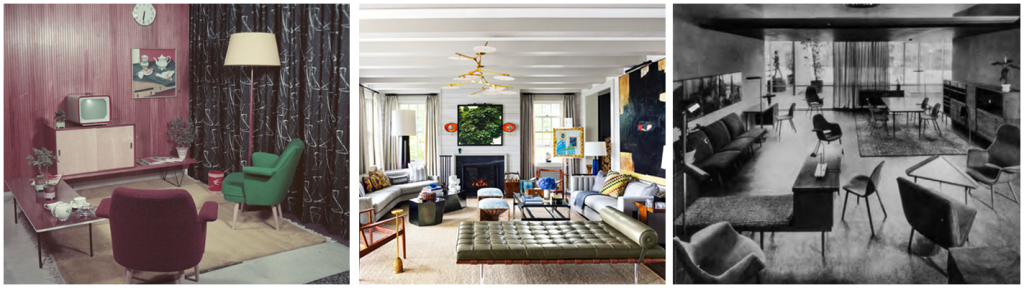
Interior Design Evolution –1950s Sitting Room, 2025 Midcentury Modern Living Room Ideas, Post-war Design and the Domestication of Modernism.
After World War II, housing changed. Suburbs expanded. Homes became smaller and more standardized. And suddenly, a much larger group of people were thinking about how to make their interiors work.
This is where interior design quietly shifts from status to problem-solving.
People needed help with layout, function, storage, and comfort. They wanted their homes to feel good, even if budgets were limited. Design advice began showing up in magazines, department stores, and catalogs. You didn’t need a palace anymore—you just needed a plan.
Interior designers increasingly worked with builders, retailers, and manufacturers. Design became practical, repeatable, and accessible.
At this point, the profession needed structure.
Making it official
By the mid-to-late 20th century, interior design began formalizing as a recognized profession.
Organizations like the American Society of Interior Designers and the International Interior Design Association helped establish education standards, ethical guidelines, and professional credibility.
Interior designers weren’t just choosing colors anymore. They were working with building codes, accessibility, safety, and human behavior. The role had expanded—but it was also clearly defined.
Design was no longer just for a few. It had become a service.
And then television got involved.

HGTV Celebrities
By the late 1990s and early 2000s, interior design entered popular culture in a very visible way.
Shows like Design on a Dime framed design as something you could try yourself. On a budget. In a weekend. With a little guidance.
This didn’t cheapen design—it changed who felt allowed to participate in it.
What started as a luxury for emperors and aristocrats had slowly become shared knowledge. Interior design moved from private commissions to professional services to something people felt empowered to attempt in their own homes.
Why this matters
Interior designers didn’t suddenly appear in the 20th century. The role evolved alongside the way people lived, built, and understood their homes.
The instinct—to shape space intentionally—has always been there. What changed is access.
And if you work with antiques, historic interiors, or older homes, you see this lineage all the time. Objects weren’t just made to be beautiful. They were made to participate in a room, a routine, a way of life.
Interior design has always been about that. We just finally gave it a name.
So, where does AI fit into Interior Design?
If you step back, every major shift in interior design follows a familiar pattern. What begins as a luxury slowly becomes more accessible. What starts as specialized knowledge eventually gets shared. The tools change, but the instinct stays the same.
Seen that way, AI isn’t an interruption in the story of interior design. It’s simply the next chapter.
At its most basic level, AI has the ability to personalize space. Layouts, furniture placement, color palettes—decisions that were once made only through professional consultation can now respond to how someone actually lives. That level of customization used to belong almost exclusively to clients with time, money, and access.
AI tools also lower the barrier to entry. You don’t need the vocabulary of the design world to begin thinking intentionally about space. You can experiment, adjust, and visualize without committing to anything permanent. That alone changes who feels comfortable participating in design decisions.
What’s perhaps most interesting is AI’s potential role as a bridge. Between designers and clients. Between users and accessibility experts. Inclusive design has often been discussed as an ideal, but not always built into the process from the beginning. AI has the potential to make those conversations more fluid and more visible.
Of course, AI is still just a tool. Like every tool before it, its usefulness depends entirely on how it’s used. It can flatten design into templates, or it can help people ask better questions. It can reinforce sameness, or it can help clarify what actually works for a specific person in a specific space.
What it doesn’t change is the underlying impulse.
People still care about how their spaces feel. They still use interiors to express comfort, identity, and, yes, status. The difference is who gets to participate in shaping those spaces—and how much support they have while doing it.
Looked at this way, AI doesn’t break from the history of interior design. It continues it. Another moment where design knowledge becomes a little more shared, a little less gated, and available to more people than before.
If you work with antiques long enough, you start to notice how little the fundamentals change. Objects were made for specific rooms, specific uses, and specific ways of living. They reflect habits, priorities, and social structure as much as style.
AI may be a new tool, but the questions it helps us ask are very old ones. How do we live? How do we move through space? What do we want a room to say before anyone speaks? The tools evolve, but the impulse to design thoughtfully—and to surround ourselves with objects that belong—remains the same.
Frank Rosa